"My product is live but sales are not where they should be." A seller in that position compares photography and video quotes, and asks who makes the best-looking work. A portfolio answers that question in seconds.
It is the wrong question. A portfolio shows a studio's best day on somebody else's product in somebody else's market. The right question is what each frame has to prove, and who answers for click-through and conversion after delivery.
Creative on Amazon is an argument conducted in a fixed set of images and one video. Brief it from what buyers already complain about, and judge it in the advertising console.
Buy the brief and the accountability. The pixels are execution.
The numbers behind this guide
| Claim | Figure | Captured |
|---|---|---|
| Where our photography and video are produced | Our own studio in Dubai, no subcontracting | Standing term, SPEC §4 |
| Operators running our brands by hand | 50 | 2026-09-04 |
| Brands run by hand today | About 70, so about 1.4 for each operator | 2026-08-28 |
| What the flat fee includes | Photography, video, listing work, and advertising, $800 a month for one product to $2,400 for five | Standing term, SPEC §4 |
| Capital a single product launch consumes, creative inside it | $8,000 to $15,000 | Standing term, SPEC §4 |
| The free audit's first creative check | Primary image click-through rate, in a written report inside 48 hours | Standing term, SPEC §4 |
Every figure is a test you can put to any studio. Ask who shoots the frames and how many accounts the art director carries. Then ask what the fee includes and what the studio measures after launch.
Photography: choosing a studio on process, not portfolio
Rank photography services on process rather than portfolio. Six checks carry the ranking.
Data-driven shot lists come first, then physical handling of the product, then Amazon compliance known cold. Consistency across variants comes next, then coverage of every channel the images will serve, then accountability for click-through after launch.
Score each candidate from one to five on those six and the ranking builds itself. Portfolios show the best day. Process predicts your day.
Shortlist only photographers whose images are live on listings you can open. Judge those thumbnails in the search grid rather than on the studio's own site.
Then run a paid one-SKU test with a written spec, a committed date, and compliance required on the first upload. A missed test deadline is a vendor's best behavior, and it does not improve after you sign.
The comparison ends at the contract. Ask for raw files delivered to storage you control, full usage rights on payment, and defined revision rounds. Add a reshoot obligation if Amazon rejects an image.
The question that reorganizes most quotes is who presses the shutter. When an agency brokers the work, it subcontracts a studio that outsources compositing. The brief loses fidelity at every hop.
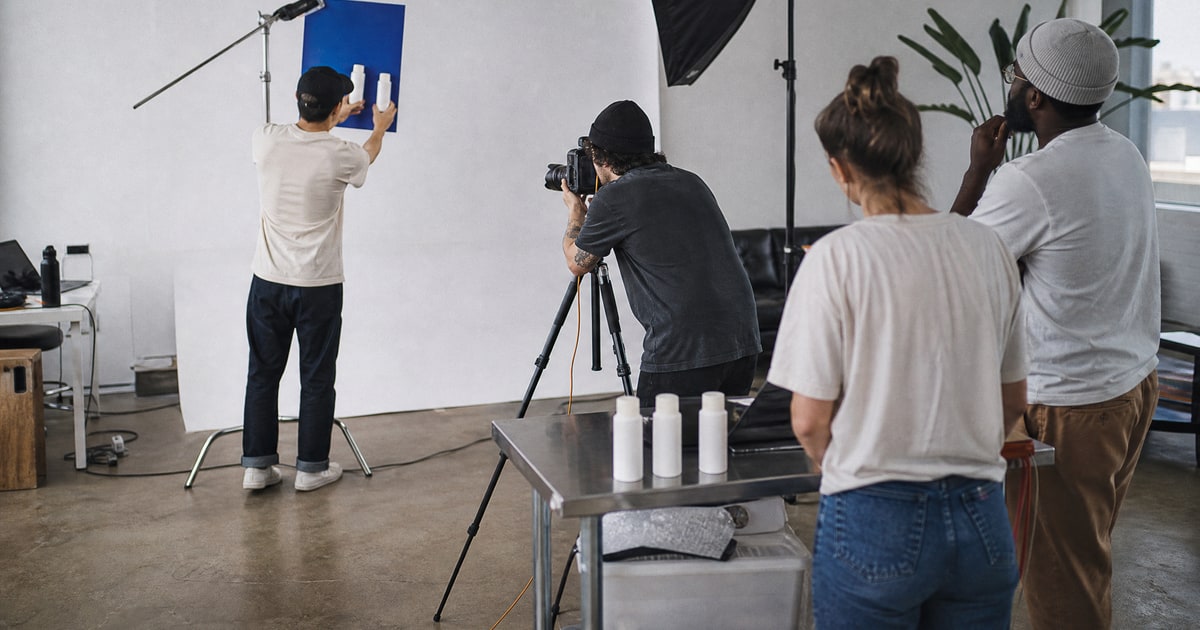
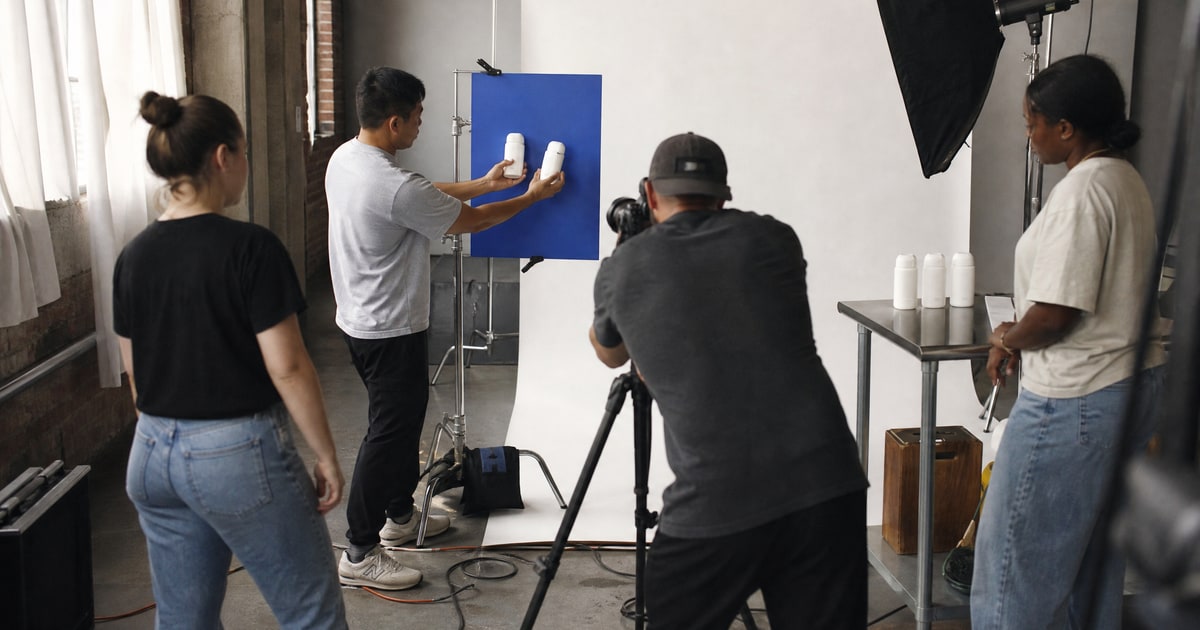
We shoot Amazon brand management clients in our own studio in Dubai with our own people for that reason. Whoever you hire, ask for the name of the art director and the name of the photographer. Then ask which company employs each of them.
The main image, and the gallery as an argument
The main image decides more than any bullet rewrite, because most shoppers decide before they read a word. Its job is the click from a grid of near-identical tiles.
So it must read as its category instantly at thumbnail size. It must fill the frame close to the allowed maximum.
It must show one differentiator a squinting shopper can still see, inside Amazon's white-background rules. A main image service worth hiring analyzes the competitor grid for your keyword, produces several concepts, and tests the winner against live click-through.
Audit a listing for conversion in order of influence: main image, price position, rating, title, secondary images, A+ content, bullets, and backend keywords. Work top down. That order also drives the Amazon listing optimization work we run for clients.
The gallery after slot one is a sequence, not a set. Each frame answers the next objection a shopper raises, in the order they raise it.
Show what the product is, then its size, then how it is built. Then show where it lives in the buyer's day, and the reason it costs what it costs.
Retouching is judged on one thing, whether the delivered product matches the image. Four checks decide it: calibrated color, consistent swatches across variants, texture retained at zoom, and compliance on the hero.
Color drift is not cosmetic. It arrives later as returns and one-star reviews.
Lifestyle frames follow the same rule. The physical product belongs in frame, with shadows and reflections obeying physics. Choose the scene because it answers a complaint, not because it decorates a page.
Video: what the listing slot needs and who should cut it
The best listing video services share five habits. They script from your customer reviews.
They edit for a viewer watching muted on a phone. They cut separate versions per placement.
They check every claim against Amazon's content rules, and they report conversion impact afterward. A vendor missing two of the five is selling production rather than sales.
The workflow is the same on a phone, with a creator, or through a studio. Mine the reviews for the buying objection. Write a script that answers it in the first three seconds.
Storyboard for silent autoplay, then shoot and cut per placement. Pass the compliance check, then measure conversion over a defined window. Speed lives in the structure rather than the editor.
Teams that already hold your assets and know Amazon's placements cut in days. A project studio re-enters a quoting queue at every revision.
The reason to leave a big-name studio is rarely price. It is that the name on the proposal is not the person doing your work. That person has other clients ahead of you in the queue.
Three structures shorten the distance between you and the person cutting frames. An agency with an in-house team is one.
A retained editor paired with creators is another. A minimal setup you own outright is the third.
Budget creative: what to buy cheap and what never to
Affordable is a ratio, cost per converted visitor rather than cost per image. A cheap set that loses the main-image click costs more than a premium shoot. You repay the difference in wasted ad spend on every click that lands.
Buy the smallest package that covers a tested main image, a full gallery with variants for testing, consistency across variations, and usage rights. Refuse any tier priced by image count, because a count buys volume rather than conversion.
Demo video has a price floor that still works. You can hire creators directly.
You can ask your own customers to film real use for the price of a unit. Or your agency studio already covers video inside its retainer.
What makes a demo cheap or expensive is not the invoice. It is whether the video answers the objection stopping the purchase. A thin brief produces a worthless video at any price.
At home, four things shoot usable clips: a phone, a tripod, one large diffused light, and a plain sweep. Spend the rest of the budget on knowing what the clip must prove.
On Amazon, research quality beats production quality. A validation-stage product deserves the smallest honest edit, upgraded when sales data earns it.
Measuring creative: the numbers that decide a reshoot
Creative is only the constraint when the data says so. Traffic that arrives and does not buy points at the gallery. Impressions without clicks point at the main image or the price.
Ads that converted at launch and decayed months later point at fatigue. Fatigue calls for a creator refresh rather than a reshoot.
Run the diagnosis before you brief anyone. A beautiful fix for the wrong symptom is the most common purchase in this cluster.
An audit that stops at the ad console misses most of it. Ours covers seven areas in writing inside 48 hours: listing quality, primary image click-through, conversion rate, ad performance, traffic channel activation, pricing, and return rate.
Advertising multiplies whatever the listing already does, including its problems. So the creative check comes before the bid check.
Judge any agency report, including ours, on five things. The first three are profit shown next to revenue, every metric tied to an action, and at least one recommendation to stop something. The last two are consistent denominators month to month and raw data on request.
A dashboard crowded with metrics and no thresholds produces reviews rather than decisions. Six numbers earn a place on the first screen.
Profit per unit, click-through, and conversion come first. Then total advertising cost of sale, or TACOS, against a stage-specific target, then return rate and rating trend.
What most agencies will not tell you
Four things stay out of the creative pitch, and on a careless day that includes ours.
- Your product may not need new images. The diagnosis step threatens the sale, so it rarely happens. If traffic converts well but arrives rarely, the problem is ranking or advertising, and a reshoot changes nothing.
- Compliant is not the same as chosen. Amazon-compliant on a sales page means the studio knows the background rules. It says nothing about your category's conventions, the competitor frames shoppers compare you against, or the rating gap in your niche.
- Per-image pricing runs a production line. It produces templates, with the same composition and angle order as hundreds of other listings. In a grid full of siblings, sameness is a click-through tax.
- Nobody volunteers the after. Almost no vendor asks what happened to conversion once the assets went live, so nobody on the vendor side learns. Keep the before and after numbers yourself, and hire the vendor who asks for them.
Hold us to all four. If we brief a shoot without showing you the review data behind the shot list, do not buy it.
Do this week
One thing to do this week, at no cost. Search your main keyword and take a screenshot of the results page.
Shrink it until each tile is the size it is on a phone. Show it to three people who do not know which product is yours and ask which one they would click.
If nobody picks yours, you have found the reshoot. If everybody does, spend the money somewhere else.
To have that thumbnail test and the gallery sequence run against your listing first, request the free 48-hour audit at Flapen.