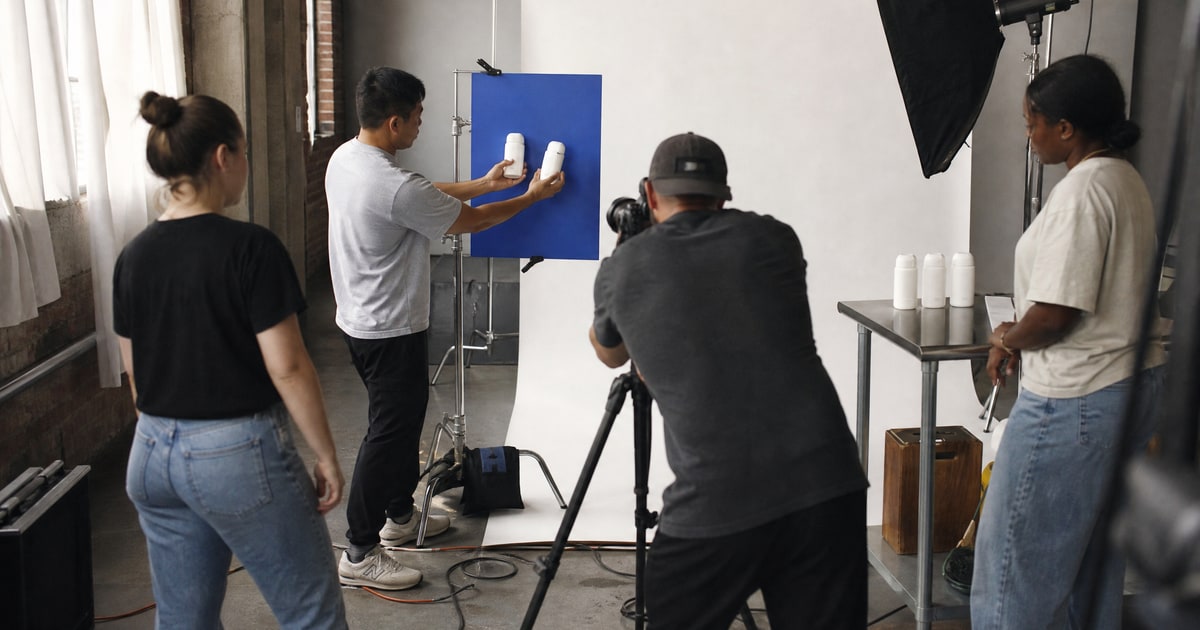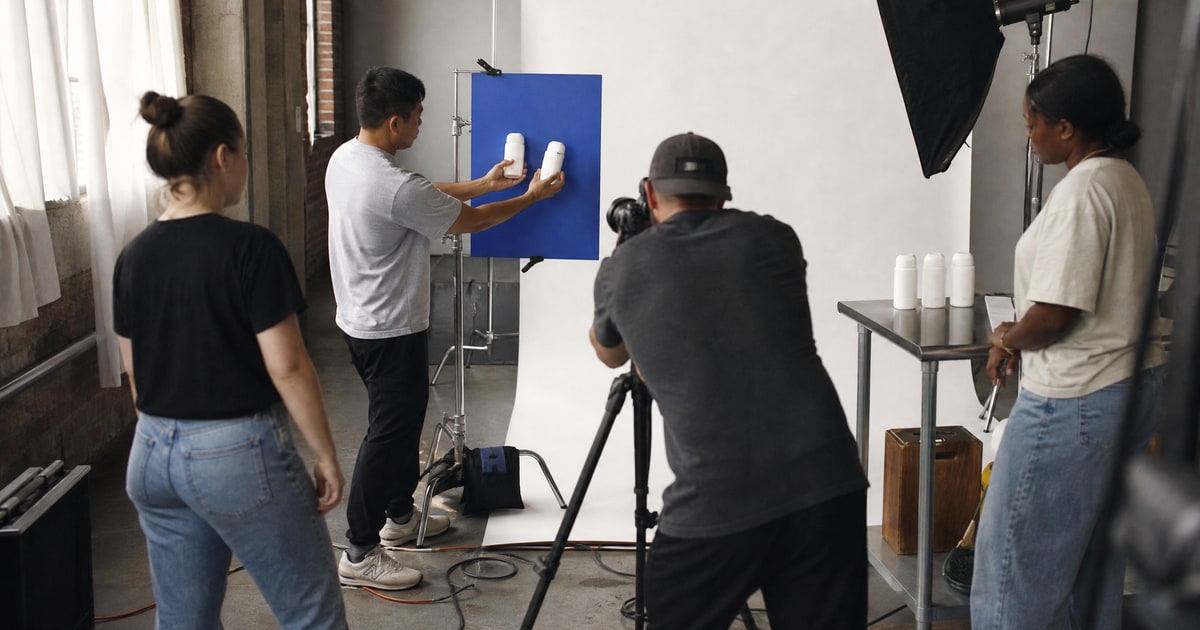
Compare them with a five-stage sequence: write the deliverable spec, shortlist only photographers with images live on Amazon, run a paid one-SKU test shoot, judge the results with click-through data instead of taste, then negotiate raw files and usage rights. Each stage has a gate. A candidate who fails a gate is out.
The short version
- "Fast turnaround" is unmeasurable without a spec. Fast to a first draft and fast to compliant, uploaded images are different promises.
- A paid test shoot is the only honest comparison. Everything before it is marketing.
- Judge with data, not eyes. Your taste and your shopper's click behavior disagree more often than you think.
- The real turnaround clock runs from payment to live images. Measure that, not the edit time.
- Terms decide whether fast stays fast. Revision policies and file ownership are where quick vendors slow down.
Stage 1: write the spec before you contact anyone
Every photographer quotes a turnaround, and almost none of them quote the number you need, the days from payment to compliant images live on the listing. Pin it down yourself. One page: the SKU, the shot list slot by slot, the main image requirement, resolution, formats, and the date the images must be uploaded.
The gate: you have a written spec any candidate can price without a call. If you cannot write this page, no photographer can be fast for you, because ambiguity is the slowest thing in photography.
Stage 2: shortlist on live Amazon work
Ask each candidate for ASINs currently live that carry their images. Open them in search results and judge the thumbnails against surrounding competitors. Portfolio sites tell you how they frame their work. Search results tell you how their work performs its actual job.
The gate: three candidates with verifiable live listings. Fewer than three and your comparison is a coin flip.
Stage 3: pay for a one-SKU test
Give all finalists, or at least your leading one, the same paid test: one SKU, the spec from stage 1, and the committed date. You are buying information, and it is cheap. How they handle questions, whether the date holds, and what arrives without prompting tells you more than any reference call.
The gate: delivery on the committed date, compliant on first upload. A missed test deadline is the vendor's best behavior. It does not improve after you sign.
Stage 4: compare with click-through data
At Flapen we underwrite products with 90 plus data points before entering a market, because eyeballing a decision this expensive is how sellers lose money. Apply the same discipline here at small scale. Put the test images live, hold price steady, and compare click-through rate against the prior period from your advertising console. Where volume allows, run it as a straight experiment on the main image.
The gate: the new images match or beat your current click-through rate. A gorgeous set that loses the thumbnail contest fails the stage, whatever your eyes say. This is also the stage where photography stops being a standalone purchase, image performance feeds directly into listing optimization, and the winning photographer becomes part of that loop.
Stage 5: negotiate the terms that keep speed
The comparison ends at the contract, because fast vendors become slow through terms. Four clauses: raw files delivered to storage you control, full usage rights on payment, a defined revision window with a response time, and reshoot obligations if images fail Amazon's checks.
The gate: all four clauses in writing before volume work begins. A photographer who resists file delivery is planning to charge you rent on your own catalog.
The five gates at a glance
| Stage | What you produce or observe | The gate that eliminates a candidate |
|---|---|---|
| 1. Spec | A one-page deliverable spec | You cannot write it, so nobody can be fast for you yet |
| 2. Shortlist | Live ASINs from each candidate | Fewer than three candidates with verifiable Amazon work |
| 3. Test | A paid one-SKU shoot on a committed date | Missed date or non-compliant first upload |
| 4. Data | Click-through comparison against your baseline | New images lose to the current set |
| 5. Terms | Raw files, rights, revisions, reshoots in writing | Resistance to file delivery or written response times |
What a fast-turnaround promise will not tell you
Where the queue actually is. Most photography delay is not shooting or retouching, it is waiting, for a studio slot, for your product to arrive, for answers to questions the brief should have covered, and for revision rounds to reach the front of the vendor's list again. A photographer with a modest edit speed and an empty queue beats a brilliant one who is booked solid.
It also will not tell you about the second SKU. Vendors staff for their average week, so the speed you experienced as a test client can halve once you send a full catalog. Ask what their turnaround commitment looks like at ten SKUs, in writing.
Related answers
- How to choose a photographer for Amazon listings
- Best Amazon product photography services
- Affordable Amazon product photography packages
- Retouching and color accuracy for Amazon images
- Amazon creative services: the complete guide
Hold our studio to the same five gates when you evaluate Flapen.