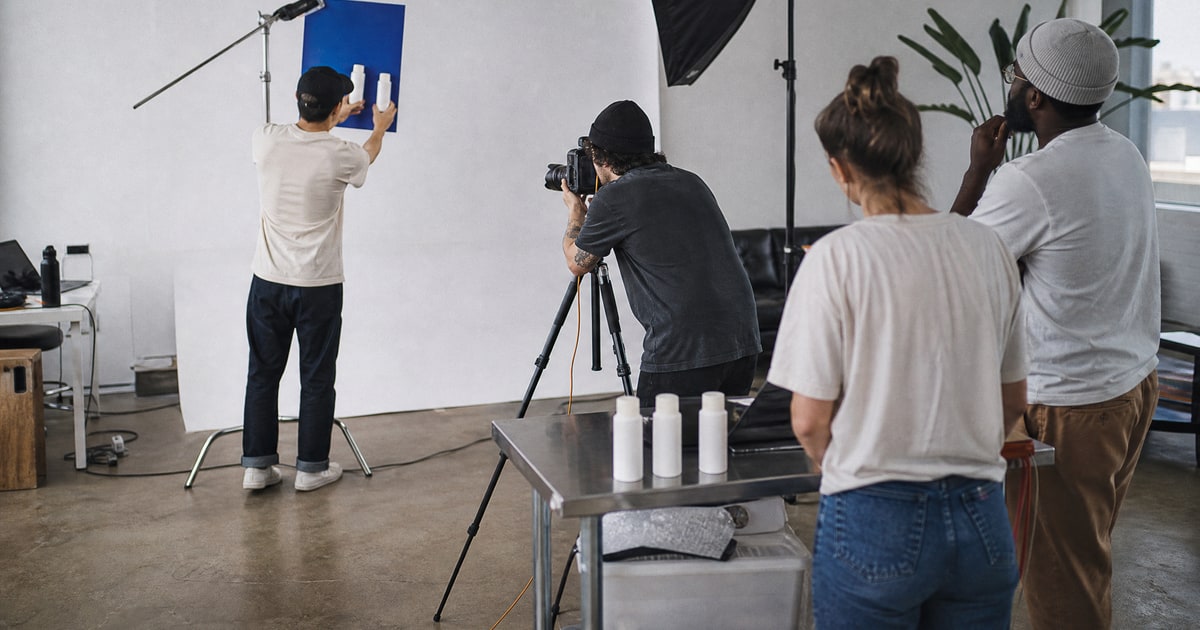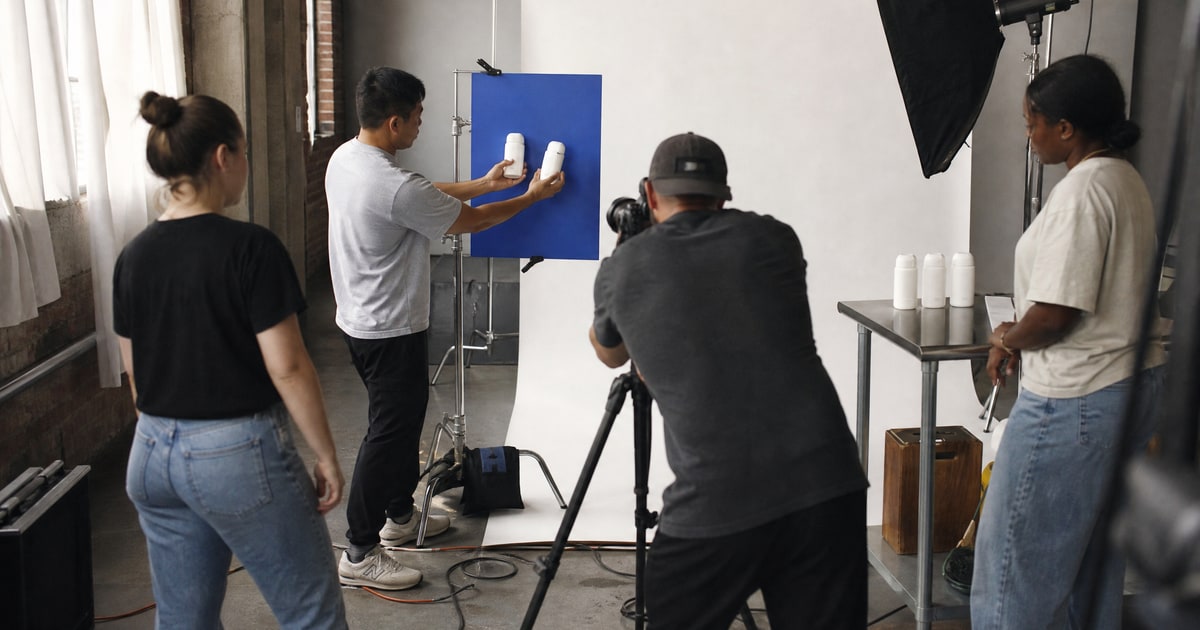
The best Amazon product photography service is the one that starts from data, not a portfolio: it sizes your market, reads competitor reviews to decide what each image must prove, handles the physical product, and takes responsibility for main-image click-through. Freelancers, studios, and agencies can all pass that test. Most do not.
The short version
- Portfolios are the wrong filter. They show a provider's best day on someone else's product, in someone else's market.
- The shot list is the product. Whoever writes it decides your conversion rate; the shutter press is execution.
- Three provider types compete for this job. Freelancers, ecommerce studios, and agencies, each with a different failure mode.
- Demand comes before photography. A gallery cannot rescue a product in a market too small to repay the spend.
- Physical handling is non-negotiable. A service that shoots your product without touching it is compositing, not photographing.
The expensive mistake buyers make first
Most sellers pick a photography service the way they would pick a wedding photographer: scroll the portfolio, feel something, pay. The images arrive gorgeous, the gallery goes live, and the click-through curve does not move. The money went into art direction that answered no shopper objection, because nobody asked what the objections were.
Photography for Amazon is an argument conducted in eight frames. The provider's real job is deciding what each frame must prove, and that decision should come out of competitor review analysis, not aesthetic preference. We build shot lists from the negative reviews of the products we intend to beat, because a shopper's stated disappointment is a free brief.
Three kinds of provider, compared
| Freelance photographer | Ecommerce studio | Agency with in-house creative | |
|---|---|---|---|
| What you buy | A shoot | A package per listing | Photography inside a growth system |
| Who writes the shot list | Usually you | A producer, from a template | The team that also runs your ads and copy |
| Data input | Rare | Sometimes | Should be standard, verify it |
| Variant and reorder scale | Limited | Strong | Strong |
| Accountability after launch | Ends at delivery | Ends at delivery | Continues, if they manage the account |
| Best for | One product, tight budget | Catalogs needing consistency | Brands that want one owner for the outcome |
The decision rule: match the provider to who owns the result. If you are keeping strategy in-house, a studio executing your data-driven shot list is excellent value. If you want one party accountable for click-through and conversion, photography should sit inside the team that answers for those numbers.
Size the market before you buy a single image
Here is the uncomfortable filter the best services apply and the rest skip. Photography is a multiplier on demand, and multiplying a small number produces a small number. At Flapen we hold a floor of $2 million per year in market size before entering a niche, because below that there is not enough revenue to capture profitably once acquisition costs are paid. Our first-phase validation runs are deliberately small, 200 units on $5,000 to $10,000, and the creative spend stays proportionate to that test.
So before you compare studios, ask each candidate a simpler question: will you look at my market before quoting? A provider who will shoot anything for anyone is selling output. A provider who occasionally says "do not spend on this yet" is selling judgment.
Photography is also one input among several. Images, copy, price, and reviews pull together inside listing optimization, and the best photo service in the world cannot outshoot a wrong price.
What photo services will not tell you
No photography service will volunteer that your product does not need new images. The diagnosis step, checking whether click-through or conversion is actually the weak link, threatens the sale, so it rarely happens. Run that check yourself before briefing anyone: if traffic converts well but arrives rarely, your problem may be ranking or advertising, not photography.
The second omission: "Amazon-compliant" in a sales page means the provider knows the background rules. It says nothing about whether they know your category's image conventions, which competitor frames shoppers compare you against, or what a rating gap in your niche looks like. Compliance keeps you listed. It does not make you chosen.
Related answers
- Rank product photography services for ecommerce
- Top product photo studios for FBA sellers
- Affordable Amazon product photography packages
- Compare product photographers with fast turnaround
- Amazon creative services: the complete guide
See how photography runs inside a flat monthly fee at Flapen.