Ask how they decide what goes in each module. A good answer references negative reviews on competing products, because that is where the objections live. A weak answer describes brand storytelling. A+ content is objection handling with pictures, and design quality is secondary to knowing what to address.
The short version
- Ask what the modules are answering. Objections, not aesthetics.
- Ask where the content decisions come from. Competitor negative reviews are the best source.
- Ask who shoots. In-house production iterates. Subcontracted does not.
- Ask about A/B testing. A+ content can be tested, and rarely is.
- Ask for conversion data, not portfolio screenshots.
The questions
I run Flapen with 50 operators managing about 70 brands, with creative produced in an in-house Dubai studio.
| # | Question | Weak answer | Strong answer |
|---|---|---|---|
| 1 | How do you decide module content? | Brand story, key benefits | Objections from competitor negative reviews |
| 2 | What research precedes design? | Competitor A+ review | Review mining, rating gap analysis |
| 3 | Who produces photography and video? | Freelance network | Named in-house studio |
| 4 | Do you A/B test A+ content? | It is not testable | Yes, via Manage Your Experiments |
| 5 | What conversion lift have you measured? | Portfolio images | Before-and-after numbers |
| 6 | Whose Brand Registry do you build under? | Ours, for convenience | Yours, always |
| 7 | What do I receive on completion? | Published content | Source files, layered |
1 and 2: where content decisions come from
The single most useful question. Most A+ content is designed from a brand brief, which produces something attractive that answers questions nobody was asking.
The better method is feedback-driven. Read the negative reviews of the top competing products and measure the rating gap. Those reviews tell you exactly what buyers in your category are disappointed by, which is precisely the set of objections your A+ content should pre-empt. The market tells you where to innovate, and it tells you what to address. You do not have to guess.
An agency that starts by reading 50 competitor reviews is doing the work. One that starts with a moodboard is decorating.
3: who shoots
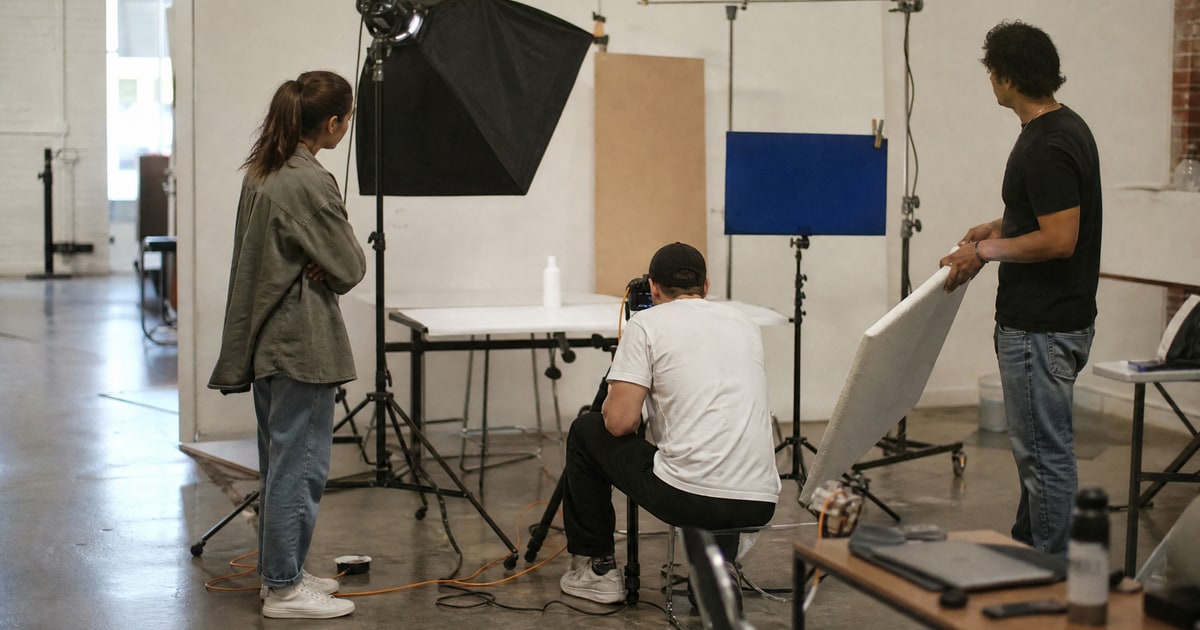
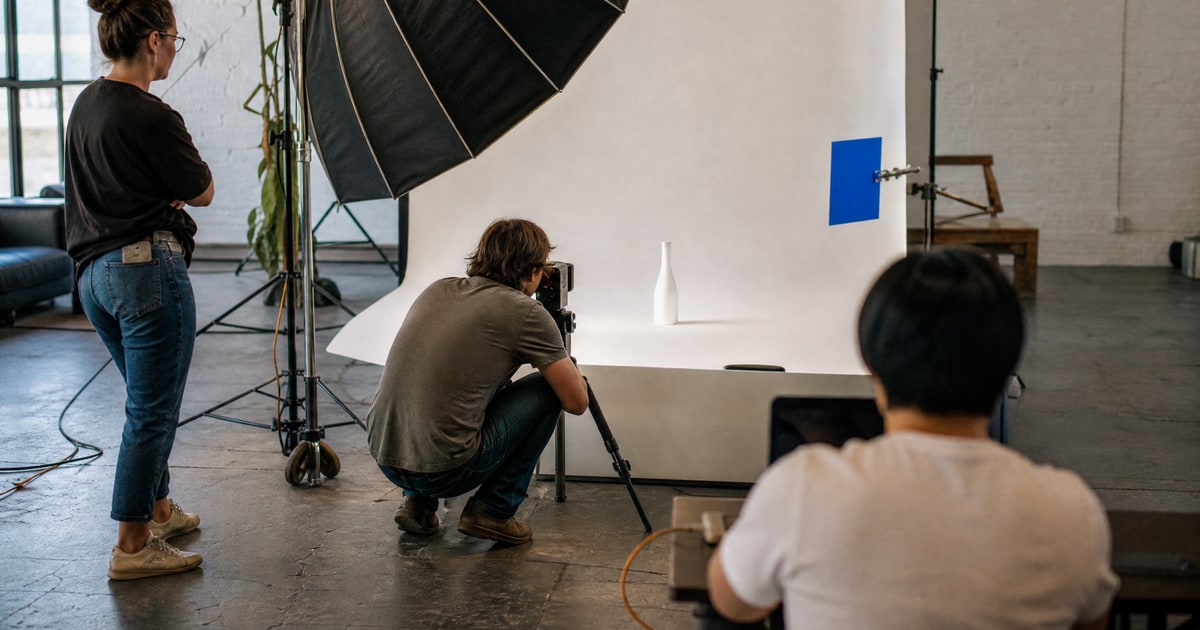
In-house production changes what is possible. Iteration on a subcontracted shoot means a new brief, a new quote, and weeks of delay, so in practice the first version becomes the permanent version.
Ask where the studio is and whether you can see the workflow. Ours runs from Dubai for creative and Guangzhou for product and packaging, both in-house.
4: testing
A+ content can be tested through Amazon's experiment tooling on eligible listings, and almost nobody does it. It is treated as a design deliverable rather than a conversion lever.
Ask whether they run experiments and what they have learned from them. An agency with real test results has genuine knowledge about what moves conversion in your category rather than general principles.
7: what you receive
Layered source files, not published output. If a relationship ends and you hold only what is live on Amazon, any future change means rebuilding from scratch.
Deliverables created specifically for you should become your intellectual property on full payment. That is how our agreement is written, and it is a reasonable thing to require of anyone.
How to judge the work itself
Look at whether each module does a job. A good A+ layout typically moves through scale and dimensions, how it works, what is included, a use case in context, a comparison against the obvious alternative, and finally brand credibility.
What you do not want is six modules of lifestyle photography and adjectives. Attractive, and it answers nothing.
The same applies to the Brand Store. A store mainly serves branded search, Sponsored Brands traffic, and off-channel visitors, so its structure should follow those three audiences rather than mirror a website.
What most agencies will not tell you
A+ content and store design are among the most profitable services in this category because they are visual, scoped, and easy to feel good about. They are also frequently not the highest-leverage thing available.
The honest ordering is usually primary image first, because it sets click-through rate and caps all traffic, then product page conversion, then A+ content, then the store. Agencies rarely lead with that because primary image testing is unglamorous and iterative while a store redesign is a project.
The other thing: design quality and conversion quality are only loosely related. Some of the highest-converting A+ content in any category looks plain, because it answers the six questions buyers actually have. Judge the brief, not the portfolio.
Related answers
- Best agencies for Amazon store design
- Step-by-step Amazon listing setup for first timers
- Amazon Brand Registry support expectations
- Must-ask questions for Amazon seller consultants
- Hiring an Amazon agency: the complete guide
Ask us what the modules are answering before you look at a single image. Flapen.