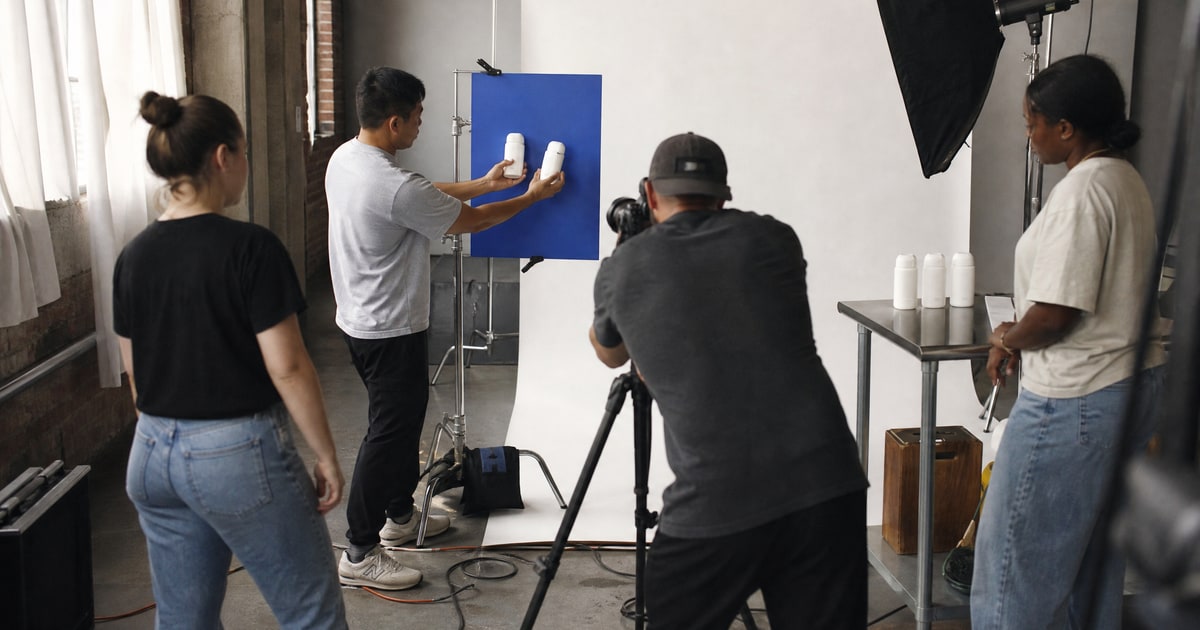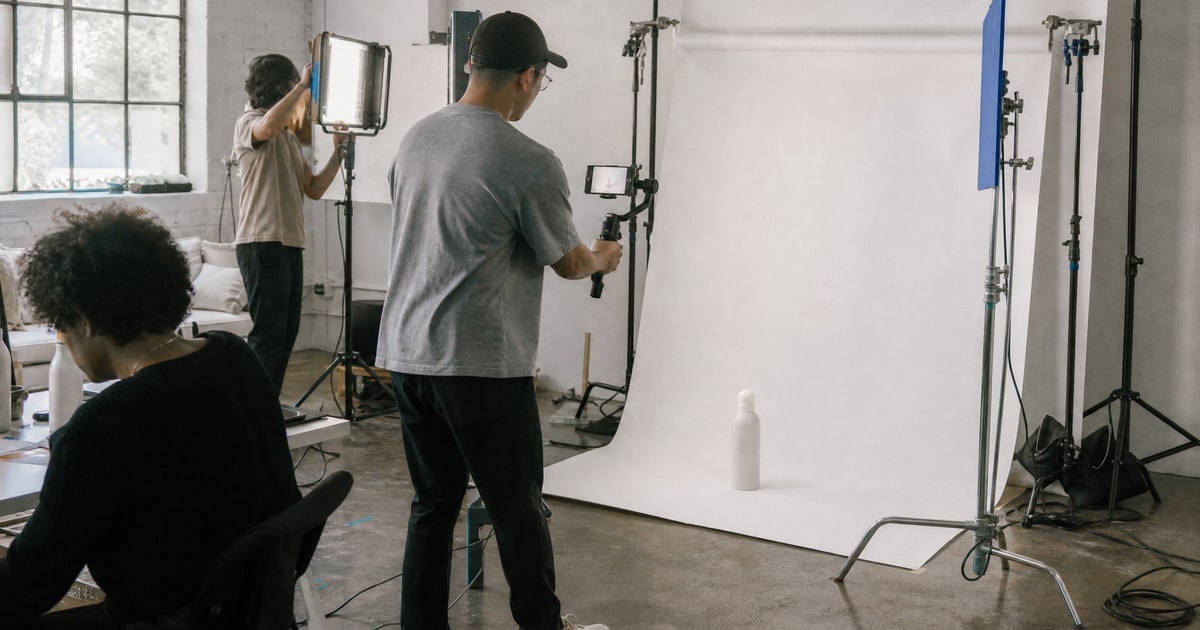
Four alternatives to gig marketplaces: a specialist ecommerce studio with published Amazon packages, a studio in your sourcing country that shoots samples before freight, an agency with in-house creative, or a trained in-house shooter. All four fix the marketplace's core flaw, which is that nobody owns the result after delivery.
The short version
- Marketplaces optimize for winning the gig. The bid, the response time, the star rating: all measured before your listing goes live.
- Specialist studios sell repeatability. Set documentation and consistent reorders, which gig work structurally lacks.
- Source-country studios shoot before freight. The sample gets photographed weeks earlier, and defects get caught on camera.
- Agencies bundle photos into accountability. The team that shoots also answers for what the images convert.
- In-house works at volume. One trained person with a fixed set beats a rotating cast of strangers.
Why the marketplace model underdelivers on product photos
The mechanism is worth understanding, because it explains every disappointing delivery. A gig platform ranks sellers by review score, response speed, and price, and every one of those signals is generated before your images face a single shopper. Nothing in the system measures whether the click-through moved, so the rational gig seller invests in portfolio gloss and fast turnaround, not in reading your competitors' reviews. Add the practical frictions, shipping your product to a stranger, briefs interpreted across time zones, a different shooter each reorder, and the inconsistent results stop being bad luck. They are the design working as intended.
Four alternatives, compared
| Ecommerce studio | Source-country studio | Agency in-house | Your own shooter | |
|---|---|---|---|---|
| Product logistics | You ship each time | Samples arrive from the factory directly | Handled inside the engagement | None, product is already there |
| Consistency across reorders | Strong, set documentation | Strong, same facility | Strong, same team | Depends on your discipline |
| Data feeding the shot list | Sometimes, ask | Rarely, brief it yourself | Should be standard | Yours to build |
| Revision loop | Defined rounds | Slower, distance and language | Continuous | Immediate |
| Best for | Catalogs needing polish | Pre-freight validation and QC | One owner for the outcome | High volume, stable products |
The decision rule: choose by where your product physically is and who should own the conversion result. If inventory has not left the factory yet, the source-country studio wins on timing alone. If images must coordinate with copy and ads, integration wins. If you just need consistent packages for a settled catalog, the specialist studio is the workhorse.
Shoot where the product is made
The alternative almost nobody considers is geographic. Your product spends weeks near its factory before it ever reaches your country, and that window is the cheapest moment to photograph it. Flapen runs its own studio in Guangzhou for exactly this reason, applying sourcing and QC frameworks built across 500+ brands: samples come off the line, get inspected, and get shot before freight is booked. Twice the value in one step, because the camera catches what the spec sheet missed, a seam that puckers, a coating that fingerprints, while there is still time to fix the batch rather than the listing.
You can approximate this without owning a studio. When you commission samples, order one extra and have it photographed in the sourcing country before mass production. The images may end up placeholder-grade, but the visual QC record alone repays the cost the first time a batch drifts from spec.
Wherever the shoot happens, brief it from your market data. The frames that matter answer the objections shoppers already voiced in competitor reviews, which is the point where photography merges into listing optimization instead of running parallel to it.
What gig platforms will not tell you
The review score you are filtering by measures politeness, speed, and delivery against the brief. It does not measure, anywhere, whether the images sold anything. A five-star gig history can be a long record of beautifully executed photos that never moved a click-through rate, and the platform has no mechanism that would surface it.
The second silence is about the bid itself. A fixed-price bid prices the expected hours, so everything unexpected, your revision, the reshoot after a misread brief, the extra angle, is either resisted or billed. The marketplace's apparent cheapness is the cost of moving all project risk onto you. Sometimes that trade is worth it. It should at least be visible when you make it.
Related answers
- Alternatives to DIY Amazon product photos
- Global studios that accept ship-and-shoot
- Compare product photographers with fast turnaround
- Alternatives to big-name Amazon video studios
- Amazon creative services: the complete guide
Factory-to-frame photography, Guangzhou studio included, comes with every tier at Flapen.