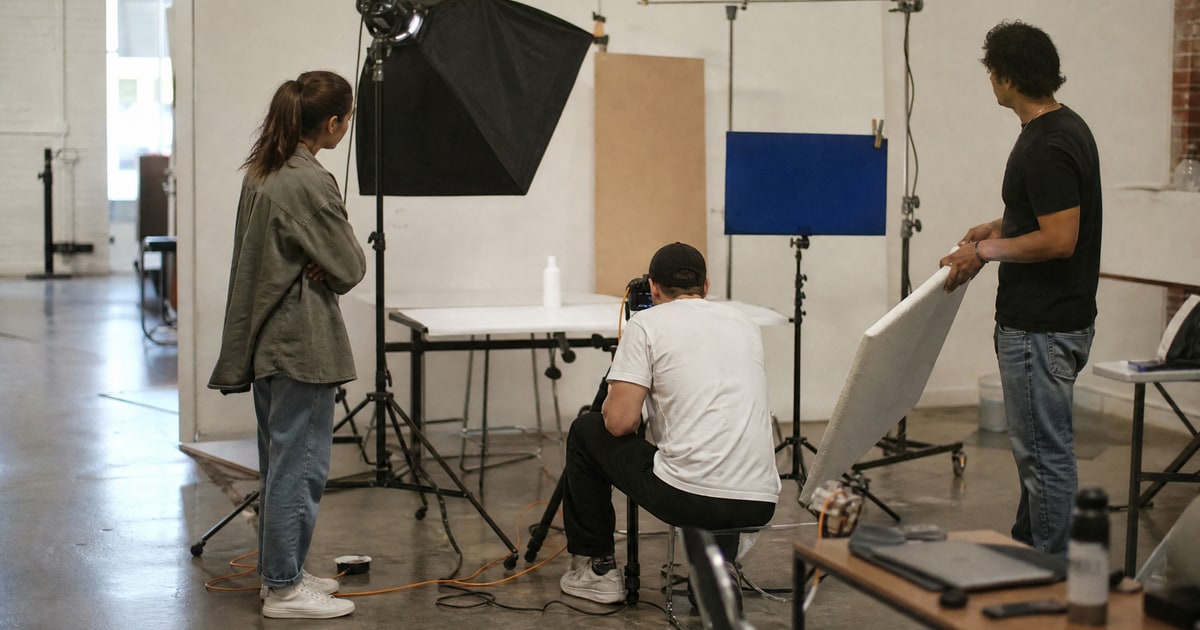
In a full-service setup one creative team owns all three, briefed by whoever owns the listing's conversion rate. Split them across freelancers and the main image stops agreeing with the A Plus module and the video. Ask any provider whether creative is in-house and who writes the brief.
The short version
- The brief matters more than the designer. Great execution of a weak brief is an expensive way to look professional.
- One team, three assets, one argument. Image, A Plus, and video should say the same thing in three formats.
- Brand registry unlocks A Plus and brand video. Enrollment is a prerequisite, not a creative decision.
- Research comes before design. We build a brief from 90 plus data points and from competitor negative reviews, never from taste.
- The main image is the highest leverage asset you own. It decides whether anything else gets seen.
Where you are probably standing
Most brands asking this question already have all three assets. They were made at different times by different people. The photographer shot the images, an agency built the A Plus module six months later from a deck, and the video came from whoever was cheapest on a freelance marketplace. Each piece is defensible on its own. Together they argue three slightly different cases for the product, and the shopper resolves that confusion by leaving.
Ownership is the fix, and ownership means one team producing all three from one brief, with a named person accountable for what the listing does afterwards.
The sequence, with a gate at each stage
Creative should be produced in this order. Each stage has a gate, and skipping a gate is where the money goes.
- Research. Pull the data before anyone opens a design tool. We work from 90 plus data points, including market size, growth trajectory, return rate, segment dynamics, and the rating gap. Gate: you can state, in one sentence, what this product does better than the top three competitors and where that claim comes from.
- Read the negative reviews of the competition. Differentiation comes from what buyers complain about, not from what a brand wishes were true. Gate: you have a ranked list of objections the creative has to answer.
- Write the brief. One document covering the claim, the objections, the buyer, and the order in which the argument is made. Gate: the brief is signed off by whoever owns the conversion rate, not only by the brand owner.
- Main image. Everything else is secondary, because this asset decides click-through in a grid of competitors. Gate: it reads at thumbnail size on a phone and the product is identifiable without the caption.
- Secondary image set. Each image answers one objection from stage two, in priority order. Gate: no image duplicates another's job.
- A Plus content. The long argument, with comparison and reassurance, for the shopper who scrolled. Gate: brand registry is live, and the modules cover the objections the images could not.
- Video. Motion for what stills cannot show, usually use, scale, or assembly. Gate: the first three seconds work without sound.
- Measure and iterate. Watch click-through and conversion after the change, then revisit stage one. Gate: a date in the calendar for the review, agreed before the assets ship.
Stages one to three are the ones providers skip, because a client can see a photograph and cannot see a research document. That is exactly why you should ask for the research document.
Who does what, in practice
| Asset | Who should own it | What goes wrong when it is brokered out |
|---|---|---|
| Main image | The team accountable for click-through | Beautiful photography that does not read at thumbnail size |
| Secondary images | Same team, working from the objection list | Six angles of the same view, no objections answered |
| A Plus modules | Same team, after brand registry is live | Brand story where a comparison table should be |
| Brand video | Same team, or a specialist briefed by them | A brand film, when the shopper wanted to see it in a hand |
| Localized versions | Native writers, not translators | Correct language, wrong claim emphasis for that market |
Our creative is produced in-house in our Dubai studio for this reason. Not because external studios cannot shoot well, but because the brief, the production, and the accountability for the result should not have three different email domains.
What creative vendors will not tell you
The pretty version is not always the winning version. Amazon creative is a sales argument in a grid of competitors, and the asset that wins is often the one that looks slightly less refined and communicates faster. Vendors rarely say this, because portfolio quality is how they get hired.
The second thing: creative alone cannot rescue a product with a rating problem. If your reviews are running well below the category, new images will lift click-through and hand more traffic to a page that shoppers do not trust. Fix the product issue driving the rating, then buy the creative, in that order.
Related answers
- Content creation services for Amazon A+ and storefronts
- Expert Amazon listing optimization services
- How to fix low Amazon conversion rate
- What does a good Amazon account audit include
- Done-for-you Amazon management: the complete guide
Ask to see the research brief behind any creative you are shown, including ours, at Flapen.