Store setup is a weekend of work. Optimization is a permanent job, and it is where the money is. Compare candidates on three things: who builds the creative, who fixes the product when the reviews say it is wrong, and whether either capability sits inside their own company.
The short version
- Setup and optimization are different purchases sold under one heading, and they are worth different amounts.
- Brand Registry comes first. A Store, A-plus content and brand protection all depend on it.
- Creative is the lever. The primary image decides the click and the click decides what your advertising costs.
- Some conversion problems are product problems, which only a partner with sourcing capability can fix.
- Rank candidates by capability location, meaning whose payroll the designer and the sourcing person are on.
Where you probably are
You have a live catalog, a Store page somebody built once, and a suspicion that the whole presentation is underperforming. Proposals have arrived, all of them offering setup and optimization, all of them about the same price, and nothing in them explains why one is better than another.
The way out is to stop comparing service lists. Every candidate lists the same twenty items. Compare instead on what each one can physically do without hiring someone else.
Setup versus optimization
| Store setup | Optimization | |
|---|---|---|
| What it is | Brand Registry, Store pages, navigation, A-plus modules, brand assets | Continuous testing of images, copy, price, variation structure and traffic mix |
| How long it takes | Days | Permanently |
| Who can do it | Most agencies and many freelancers | Far fewer, because it needs creative and data in the same room |
| How to verify | It exists and looks right | Click-through and conversion changed, and the change log says why |
| Reasonable expectation | A one-time fee or included in the first month | Part of the monthly management fee |
The decision rule. If you only need setup, buy setup and do not sign a retainer for it. If you need optimization, ignore the setup portfolio entirely and evaluate the two capabilities below, because they decide whether anything improves after month one.
Capability one: creative that lives in-house
The primary image is the highest-leverage asset you own. It determines your click-through rate, which determines your effective cost per click, which determines what your entire advertising budget buys. A Store page with beautiful navigation cannot compensate for a thumbnail that loses.
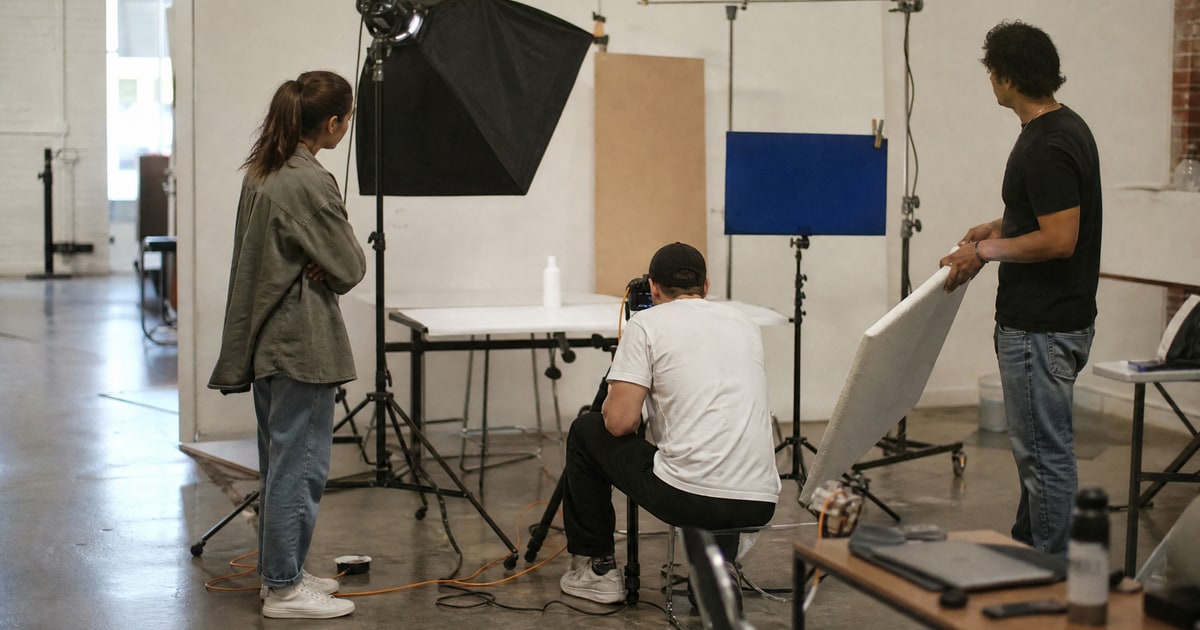
The practical question is turnaround. If your agency has to brief an outside studio, wait, review, and re-brief, image testing moves at one iteration a month. Ours sits in-house in Dubai, which is why I would ask any candidate the same thing: is the person who makes the image an employee, and what is the turnaround for a variant.
Ask for three things: sample work in your category, the turnaround time, and how they decide a variant won. That last one separates design opinion from optimization.
Capability two: the ability to fix the product
Some conversion problems cannot be solved on the page. If the reviews repeatedly complain about the same defect, no amount of copywriting fixes it, and the honest response is a packaging change, a specification change, or a different supplier.
That is a sourcing job. Our studio in Guangzhou exists for this, and the frameworks it uses were built across more than 500 brands, so a review pattern turns into a supplier conversation instead of a shrug. Most agencies have no route to that conversation at all, which is fine as long as everyone is clear about it in advance.
Ask a candidate what they do when negative reviews point at the product itself. A useful answer describes a process. A weak answer talks about review management.
How to rank a shortlist
- Confirm Brand Registry status and who will manage it. Everything else depends on this.
- Ask where the designer sits and get a turnaround time for one image variant.
- Ask what happens when reviews indicate a product fault, and listen for whether sourcing exists.
- Ask how a winning variant is decided, and expect a metric rather than a preference.
- Ask how many brands the operator assigned to you also carries.
- Ask what the exit looks like, and confirm you keep the Store, the A-plus content and the creative files.
- Ask for the free audit before you sign. Ours returns a written report with prioritized fixes in 48 hours.
Rank on items two, three and five. Those are the ones that cannot be improvised after you sign.
What most agencies will not tell you
A Store rebuild is one of the easiest things to sell and one of the least likely to move revenue, because most of your traffic arrives on a product detail page and never sees the Store at all. It photographs well in a case study. It rarely changes the number that matters.
The second thing: agencies avoid product-level conclusions because they are commercially inconvenient. Telling a client their packaging causes returns invites a hard conversation and a project the agency cannot bill for. It is also frequently the correct diagnosis, and you should ask for it explicitly rather than waiting for it to be volunteered.
Related answers
- What agency to use for Amazon store setup and optimization
- Amazon storefront design services comparison
- Best agencies for Amazon product launch strategy
- How to choose a full-service Amazon partner
- Done-for-you Amazon management: the complete guide
Ask for the image turnaround time and the sourcing answer on the first call with Flapen.