A storefront is your brand's own page on Amazon, and eligibility inside your own account is the gate you clear before you can build one. Everything past that gate is a creative project with a price on it. Count the build in hours, then set the extra units it has to move before it has paid for itself.
The short version
- Eligibility comes before design. Settle it inside your account first, because creative booked for a page you cannot publish yet gets paid for twice.
- The bill is hours. A shot list, photography, video, written copy, and assembly are the whole cost, and they come out of somebody's week.
- Who builds it decides what those hours buy. Our photography and video come from our own studio in Dubai, and each of our operators carries about 1.4 brands.
- Payback is read in units. Divide the build cost by what one unit keeps and you have the extra units the page owes you.
- The page outlives the contract. We run month to month on 30 days' notice, and you keep the account, the campaigns, and the creative when you go.
Where the money goes in a store build
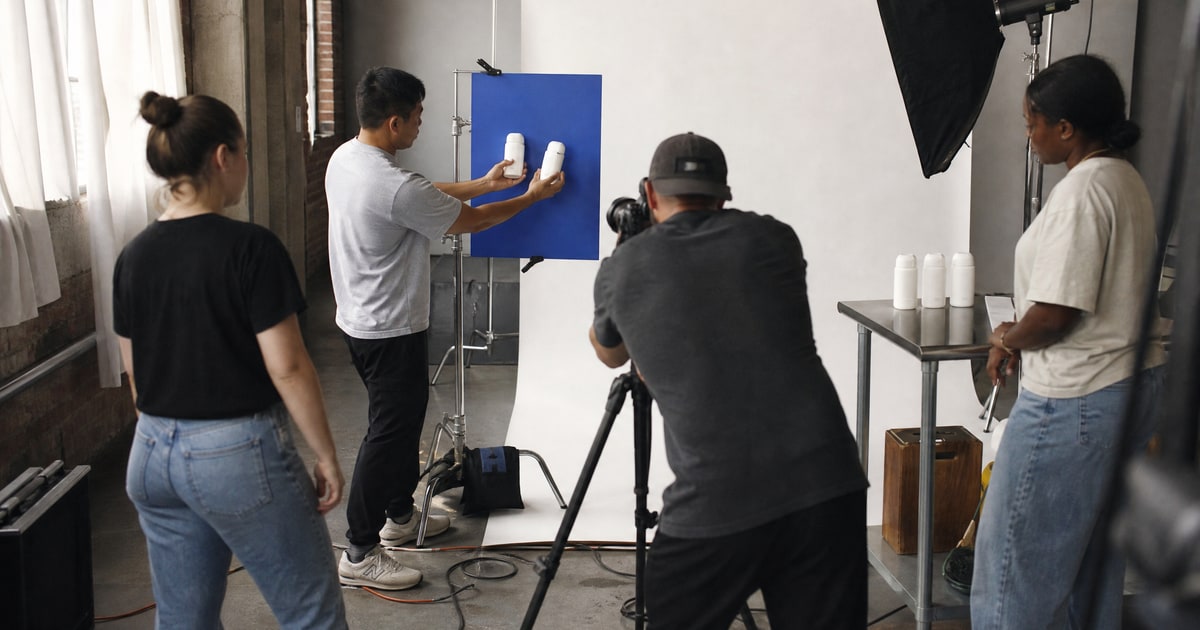
A store build has four cost lines and all four are time. Research comes first, the hours spent reading what buyers complain about in the products already selling. Capture comes second, the photography and the video.
Copy is third, the written argument for this brand over the next one. Assembly is fourth, the hours of placing the assets and fixing whatever comes back wrong. Price each line in hours at whatever an hour costs you, and the build stops being a mystery.
Then hold that total against the alternative. Full management here runs $800 a month for one product and $2,400 for five, with no commission on your sales. Store work sits inside that fee with the photography and the video, and all 50+ services are included at every tier.
A project quote and a retainer answer different questions. One buys a page. The other buys the hours for a page plus everything else the account needs that month.
The division that tells you whether to build
Write the build cost as one number. That is either the quote you were handed or your own hours multiplied by what an hour costs you.
Write what one unit keeps after landed cost, Amazon's fees, and advertising. Call it the contribution per unit, and compute it for the product you would put at the top of the page.
Divide the first number by the second. The quotient is the extra units the store has to add before the build is paid back. It is the only figure worth arguing about at signing.
Put your own numbers through it. Say the build takes 40 hours, your hour costs $50, and a unit keeps $6 after everything. The build is $2,000 and the page owes you about 334 extra units, and every figure in that example is yours rather than ours.
Now set the quotient against last month's units. A page that needs two months of your current volume is a decision you can make. A page that needs eight months is a demand problem wearing a design brief.
| Line in the build | What to write down | Who sets it |
|---|---|---|
| Research | hours reading the complaints under what already sells | you |
| Capture | hours of photography and video, or the studio quote | the studio |
| Copy | hours writing the brand argument | you or the agency |
| Assembly and revisions | hours placing assets and fixing what returns wrong | whoever holds account access |
| The fee it sits inside | $800 a month for one product to $2,400 for five, all 50+ services | the tier you buy |
| Payback | build cost divided by contribution per unit, read in units | your market |
Flapen figures as of September 2026. The hour rows are your estimate, not ours.
The 1.4 behind who has the hours
Hours are the whole cost, so the real question is whose hours they are. Fifty operators here carry about 70 brands by hand, which works out at about 1.4 brands each. We publish that ratio because it decides whether a build gets a block of days or the gaps between other people's emergencies.
Ask any vendor for the same number before you ask for a price. An account manager carrying ten brands is not short of skill, but the arithmetic of the week runs against a build. The page then arrives late, or it arrives thin.
Ask where the pictures are made as well. Ours are made in our own Dubai studio with nothing subcontracted, so a brief goes from the operator straight to the photographer. Every hop between those two people costs you a revision round.
One term changes the payback horizon. On exit you keep the Seller Central account, the campaigns, the creative, and a written handover, on 30 days' notice. So the hours you buy survive the vendor, and the division you ran covers more months than the contract does.
What a creative vendor will not tell you about a store build
Three lines go missing from most quotes, and on a careless day that includes ours. Each one is a number the division above needs.
| The line in the quote | The cost it leaves out | What to ask before signing |
|---|---|---|
| A one time build fee | the second year of edits, which arrive with every new product | the hourly rate for changes after handover |
| A price per page | nothing at all, because pages do not repay an invoice and units do | which product on the page is expected to move stock |
| A revision allowance | the revisions past the allowance, the line that quietly grows | what one revision costs once the allowance is used |
| Design folded into a retainer | the hours it takes from everything else in that month | how many brands the person building it carries |
Add the missing lines and run the division a second time. A $2,000 build carrying $800 of second-year edits owes you the units for $2,800, not for $2,000. That is the number to sign against.
Then run the whole arithmetic on us. If the extra units look implausible against what you sell today, do not buy a store build from anyone, Flapen included.
Related answers
- Amazon SEO consultants
- A9 Amazon
- What KPIs to track for Amazon FBA growth
- Who can edit Amazon showcase videos fast
- Amazon creative services: the complete guide
One free thing to do this week, for the seller running one to three products at $5,000 to $30,000 a month. Work out the contribution per unit on your best product, after landed cost, Amazon's fees, and advertising.
Then take the highest store quote you have been given and divide it by that figure. You are looking at the units the page owes you, and that number usually makes the decision for you.
To have that division run against your own listing first, ask for the free written audit that returns inside 48 hours at Flapen.