A brand store is a destination, and a destination is worth what arrives at it. Amazon opens one to a portion of sellers rather than all of them, which makes the build a choice rather than a requirement. Score the traffic you can land on it across the five channels before you pay anyone to build or rebuild it.
The short version
- A store receives traffic and never creates it. Its worth is decided upstream, by the channels you already run.
- There are five traffic channels and most sellers run two. Organic, paid, promotions, influencer and creator, and off-channel is the whole set.
- Off-channel and creator visitors are who a store is for. Those people came for the brand before they came for one unit.
- Six rows, weighted, with a pass mark you write down first. A row you can evidence takes its full weight and a row you are guessing at takes zero.
- A store does not rescue a product page that loses. When clicks arrive and orders do not follow, the money belongs on the image, the price, or the rating gap.
The five channels decide what a store is worth
"I'm spending money on ads but don't know if it's working." That sentence often arrives beside a second one about the store, because a store looks like the missing piece. It is not a piece that makes anything. It is where something else ends.
The five channels, in order, are organic, paid, promotions, influencer and creator, and off-channel. Most sellers run two, because organic ranking and text ads are what the education market teaches.
Those two deliver a shopper who typed a product need into a search bar and wants the page they searched for. The other three carry a visitor who met the brand before the unit, through a creator, a deal, or a blog.
So a store earns its build from the channels most sellers have never switched on. A brand running two of five is paying for a room with no door into it.
Score the store before you pay for it
Score six rows and weight each by what it costs you when it is wrong. A row you can evidence takes its full weight, and a guess takes zero, because a guess and a blank buy the same nothing.
| Row | What full weight looks like | Weight |
|---|---|---|
| Channels that land on a brand destination | You run three or more of the five and know where each one lands a visitor today | 25 |
| Off-channel traffic already exists | A blog, a social account, or another platform sends people who came for the brand | 20 |
| Creator and promotion traffic has somewhere to go | Your creators and your deals reach an audience that looks past the first product | 15 |
| A range worth browsing | The catalog gives a visitor a second product to consider | 15 |
| The product page already converts | Visits turn into orders at a rate you would defend, with returns under 8% | 15 |
| A baseline written down before the build | You recorded last month's visits and sales for whatever traffic lands on now | 10 |
Flapen figures as of September 2026. The 8% return rate is our threshold. The weights and the pass mark are yours.
Write the pass mark down before you score, so the bar cannot drift toward the quote you already like. Seventy out of 100 is a defensible place to put it.
A total under your own mark is not an argument for a better designer. It says the store is not the constraint, and the money belongs to whichever channel would have fed it.
What a build is worth against capital you already committed
Price the build against money you have already agreed to spend. Phase 1 of a launch runs 200 units and $5,000 to $10,000, committed before a single number is proven.
A store quote taking a real share of that figure, on a brand running two channels, buys the room instead of the door. On a brand running four of the five, it is cheap.
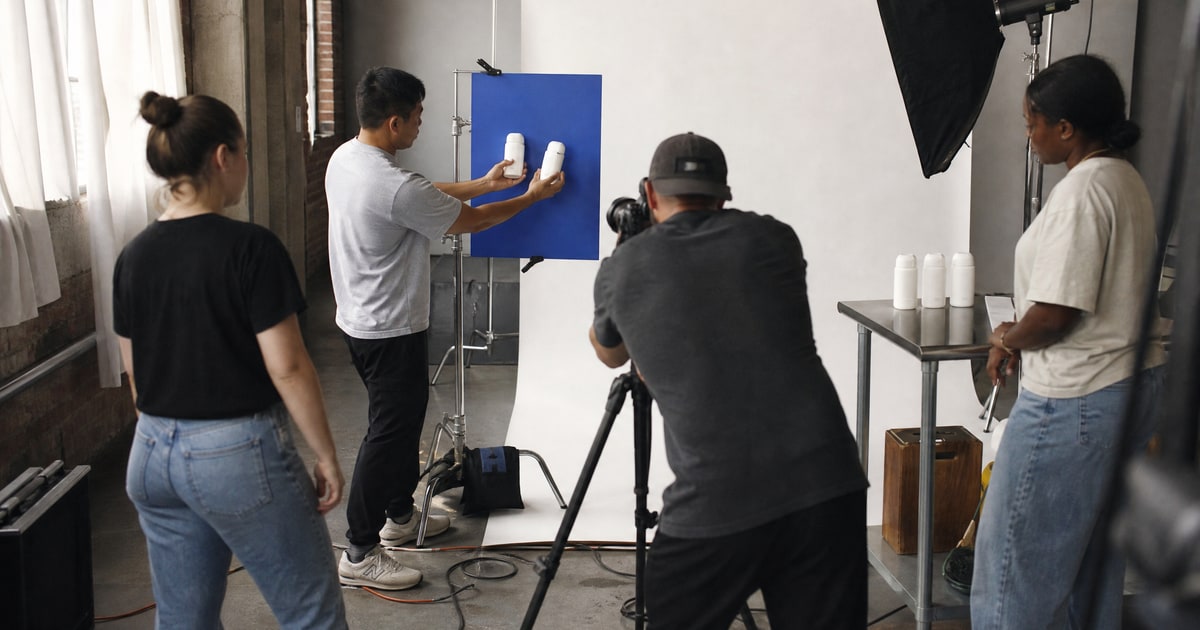
Photography and video here are shot in our own studio in Dubai. Fifty operators in Abu Dhabi run about 70 brands by hand, nothing subcontracted. Storefront work sits inside the flat fee, $800 a month at one product to $2,400 at five.
The free written audit covers traffic channel activation alongside listing quality, primary image click-through, and conversion rate. It reads ad performance, pricing, and return rate too, and comes back inside 48 hours.
Set the reading window before anyone starts. Score the same six rows again 60 to 90 days after launch, one channel at a time. If no channel changed, the design was never the variable.
What a storefront quote will not tell you
Four things stay out of the proposal, and on a careless day that includes ours. Score the quote on the same method, against a mark you set before reading it.
| What to score in the quote | Weight | Full weight looks like |
|---|---|---|
| Which of the five channels the build serves | 35 | The proposal names the channel and what that channel sends today |
| Who holds the camera | 25 | The images and video come from the people signing, in a studio they own |
| The number the work will be judged on | 25 | One metric and one window, agreed in writing before anyone starts |
| The remedy when the number does not move | 15 | Revisions or a stop, named in the quote rather than sold as a second project |
Flapen figures as of September 2026. The weights are a starting point and the pass mark is yours.
Row one is the row nobody volunteers. A build priced against design is easier to sell than a build priced against the traffic that has to reach it.
Row two decides whether your brief survives. Brokered creative passes to a studio that outsources retouching, and fidelity drops at every hop.
Row three protects you after delivery, and almost nobody asks what the store did to the numbers. Score us on that card too. If we cannot name the channel that will feed your store and the number it will be read on, do not buy the build from us.
Related answers
- Amazon SEO consultants
- A9 Amazon search ranking
- What to use for keyword gap analysis on Amazon
- Who offers the most thorough Amazon account audit
- Amazon creative services: the complete guide
One free thing to do this week, for a seller running two or more products. Write the five channels down the left of one sheet: organic, paid, promotions, influencer and creator, and off-channel.
Beside each, write where a visitor from it lands today and how many visits it sent last month. Four blank lines means the build is not this month's purchase.
Ask for the free written audit and get your traffic channels, your listings, and the store behind them read back to you inside 48 hours by Flapen.