China still wins most private label categories, because the supplier cluster for your specific product is usually there. Vietnam, India, Turkey, Mexico, and Poland win on duty, lead time, or proximity to your marketplace. Pick the country your product's cluster sits in, then verify the factory in person.
The short version
- Countries do not make products, clusters do. The right question is where the supply base for your exact category concentrates.
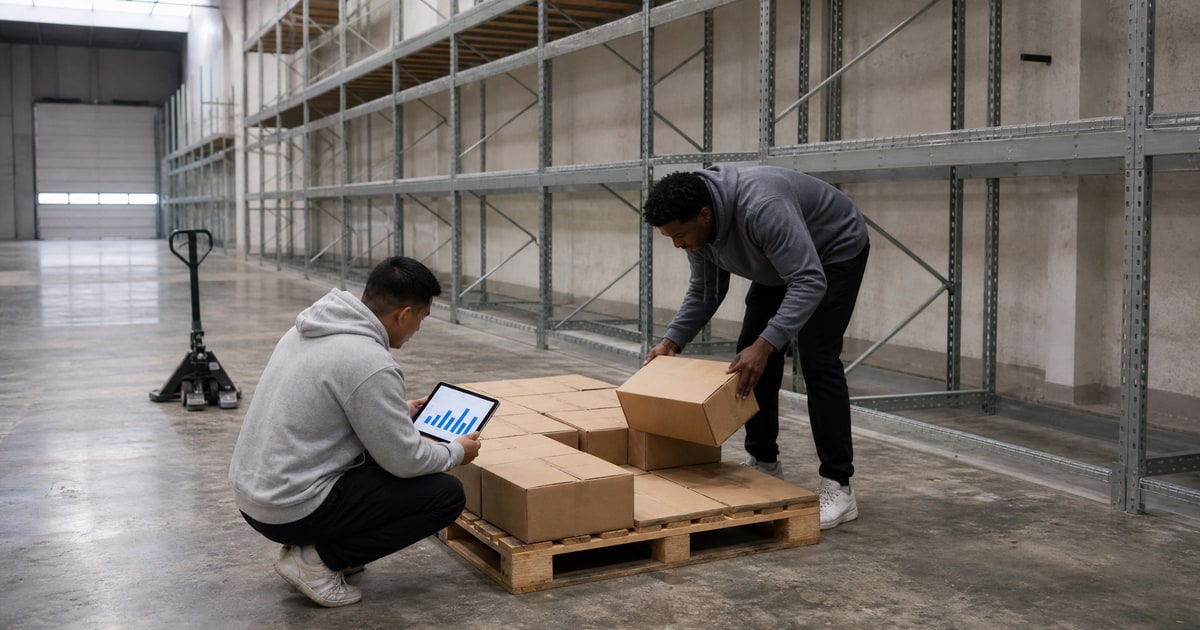
- Landed cost decides, not unit price. Duty, freight mode, lead time, and defect rate move the number more than the quote does.
- Proximity to the marketplace is a real advantage. Shorter lead time means smaller orders, faster reorders, and less cash locked in transit.
- Every sourcing relationship needs stop conditions. Write down what would make you leave a factory before you tool with them.
- Somebody has to be in the building. Remote qualification is how quality problems arrive by container.
The mechanism: cluster first, country second
Manufacturing concentrates. Whatever you are making, there is usually a region where the tooling, the component suppliers, the finishing shops, and the experienced line workers all sit within a short drive of each other. That cluster is why one country produces your category cheaply and another quotes you a price that assumes importing half the inputs.
So the sequence is: identify the cluster for your specific product, then evaluate the countries the cluster spans, then compare landed cost and lead time from each. Choosing a country first and looking for your product in it is how sellers end up paying a premium to a trading company that quietly orders from the cluster anyway and adds a margin.
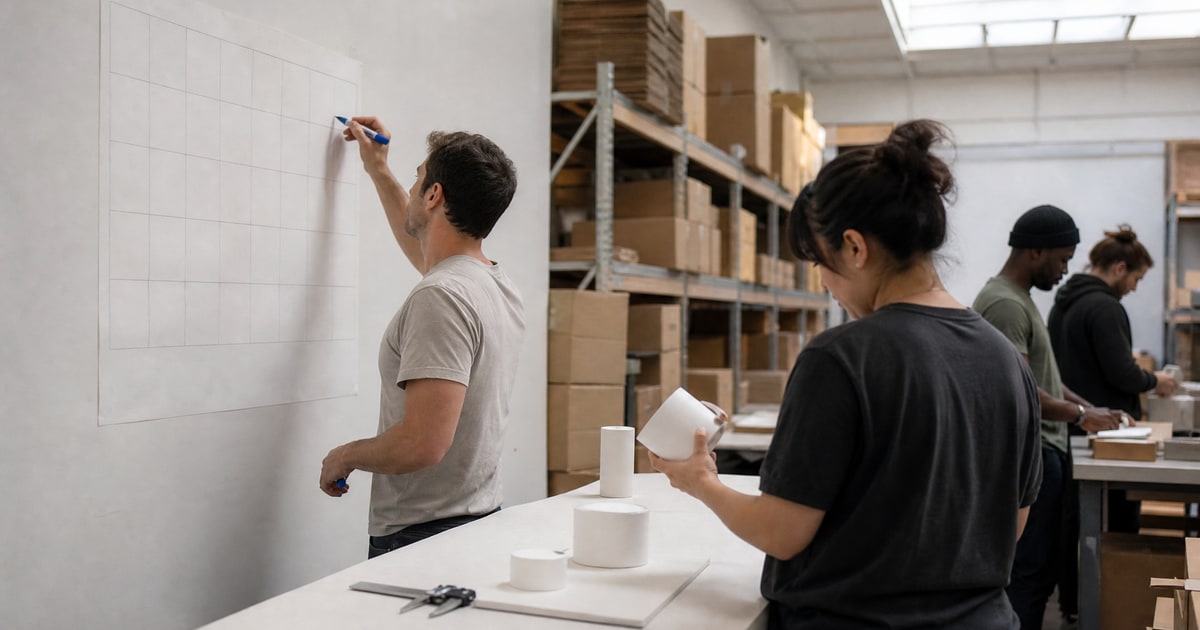
Our own sourcing studio sits in Guangzhou for exactly this reason. Being inside the cluster means samples move in days instead of weeks, a person can walk a line before a deposit is paid, and the frameworks we have built across more than 500 brands are applied to a real factory rather than a profile page.
Diagnostic: what your symptom says about where to source
| Symptom | What it usually means | What to change |
|---|---|---|
| Unit price competitive, quality inconsistent between runs | You are buying from a trading company presenting itself as a factory | Trace the actual production line, or move to a supplier inside the cluster you can inspect |
| Lead times keep slipping on small orders | Your volume does not command priority at that factory | A smaller factory where you matter, or a nearer country where slippage costs less |
| Margin destroyed after customs | The country choice is a tax decision you made without the tax | Model landed cost per country, including duty and any preferential trade terms |
| Samples good, production units worse | No inspection regime, or no one present during production | Third party inspection at minimum, ideally your own person or partner in the region |
| Everything takes three emails and a week | Time zone and language distance | A region closer to you, or a sourcing partner who sits in the cluster |
| Cash always locked in transit | Long ocean lead times with no air option modeled | Nearer sourcing, or split shipments with an air portion on fast movers |
What each region tends to be good at
China. The deepest cluster coverage for most private label categories, the widest component availability, and the most experience with export documentation. It remains the default for a reason, and the reason is capability rather than price alone.
Vietnam. Strong in textiles, furniture, footwear, and increasingly electronics assembly. Often chosen for duty reasons as much as cost.
India. Strong in textiles, home goods, leather, jewelry, and pharmaceuticals adjacent categories. Quality variance between suppliers is wide, which raises the value of proper qualification.
Turkey. Fast to Europe, strong in textiles, home, and cosmetics. Lead time advantage into EU marketplaces is the main argument.
Mexico. Proximity to the United States, useful for bulky goods and anything where freight cost dominates the landed cost.
Poland and central Europe. Short lead times into EU marketplaces, good for furniture, home, and anything heavy where intra-EU freight beats an ocean route.
Rank these against your own category, not against a general list. A country that is excellent for furniture may be irrelevant for a small plastics product.
Stop conditions for a supplier
Define these before you pay a deposit, because you will not define them fairly afterwards. I learned this the expensive way, on my own product. It was not performing, and instead of accepting that, I poured money into it for three months hoping advertising would turn it around. It did not. That is where our kill criteria came from, and the sourcing version is identical: a defect rate above a line you set, a second missed ship date, a refusal to allow inspection, or a quality drop after a price negotiation.
Write the line down, share it with the supplier, and act on it when it is crossed. Then ask any agency or sourcing partner the same question: what would make you tell me to walk away from this factory. If the answer is vague, they have never had to.
What most agencies will not tell you
Plenty of sourcing services are a layer over the same platforms you can access yourself, with a fee attached and nobody physically near the factory. The tell is simple: ask who visits, how often, and what happens during production rather than after it. Ask for the name of the city, not the country.
The second thing is about switching. Moving factories is expensive in tooling, sampling, and time, so both sides know you are unlikely to leave once you have tooled. That leverage is real and it shifts against you at exactly the moment quality slips. Keep a qualified second supplier warm from the beginning, even if you never order from them. It costs a few conversations and it changes every negotiation you have afterwards.
Related answers
- How to reduce MOQ and upfront inventory risk
- Inventory order size for first Amazon run
- What products to avoid due to patents
- Global expansion costs after first Amazon product succeeds
- Amazon seller roadmaps and capital: the complete guide
If you want a factory qualified by people who are actually in the cluster, that is the sourcing side of Flapen.