A startup buying its first listing video should score services on four things: whether the shot list comes from research or a mood board, who owns the raw footage, what happens if Amazon rejects the video, and whether the price fits a validation-stage budget. Buy the smallest edit that honestly demonstrates the product, and upgrade when sales data earns it.
The short version
- Your first video's job is proof, not branding. A clean demonstration with captions outperforms a brand film at this stage.
- Stage-match the spend. Validation-stage products deserve validation-stage creative budgets, upgraded on evidence.
- The scorecard below weights what startups actually risk: wrong arguments, lost footage, and compliance rejections.
- The sample pipeline is the hidden dependency. No production-representative unit, no honest video, whatever you paid.
- Footage ownership decides your year-two costs, because every re-cut, ad variant, and seasonal edit draws on the raws.
The startup scorecard for video services
Score each candidate 1 to 5 per row, multiply by the weight, and rank. The weights reflect what goes wrong for early-stage sellers specifically.
| Criterion | Weight | What a 5 looks like |
|---|---|---|
| Research-driven shot list | 30% | Every shot maps to a competitor complaint, search term, or stated objection, shown to you before filming |
| Rework and rejection terms | 20% | Policy-rejection re-edits at vendor cost, one revision round included, in writing |
| Raw footage and rights | 20% | Raws delivered, all rights transfer on payment, no licensing residue |
| Stage-appropriate packages | 15% | A lean validation tier exists and the vendor recommends it when it fits |
| Sample handling and turnaround | 15% | Clear intake for your unit, stated days to delivery, shoot scheduled off sample arrival |
Two rows deserve comment. The research row is weighted heaviest because a startup cannot afford a beautiful video of the wrong argument; the claims a first video must prove are the same ones that justified launching the product, and they come from product research, not from a creative call. And the rights row matters more for startups than anyone, because early footage gets recycled into ads, A+ content, and marketplace expansion for years; renting it back from a studio is a tax on your whole roadmap.
The sample is the video, before the video
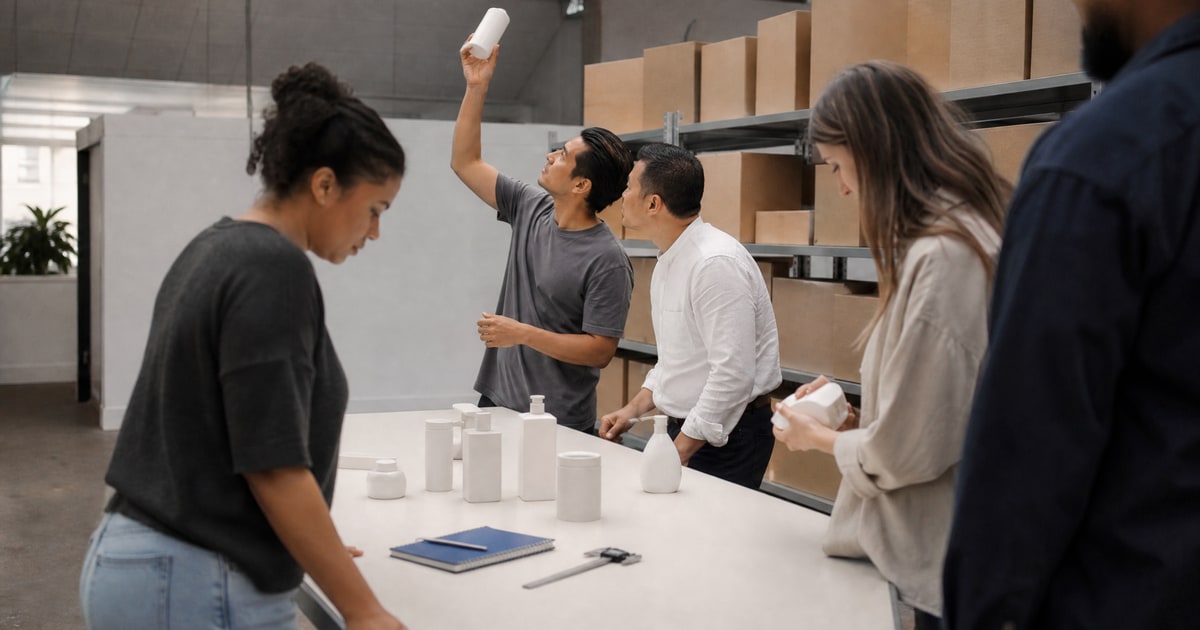
The quiet failure in startup video projects is upstream of the studio: the unit that gets filmed. Founders ship a hand-finished golden sample, the factory ships something two tolerances looser, and the video becomes a promise production does not keep, billed later in reviews and returns.
The fix is sequencing. Film the production-representative unit, the one that passed pre-shipment inspection, not the prototype. This is where an integrated pipeline quietly outperforms a la carte vendors: our studio shoots units that come straight off the sourcing line in Guangzhou, checked by the same team against the same spec sheet, using supplier and QC frameworks built across more than 500 brands. A startup assembling its own chain can replicate the discipline cheaply: hold the shoot until an inspected unit exists, and courier that unit, not the prototype, to whoever films it.
Match the package to your stage
- Validation stage, first 200 units: a captioned demonstration edit, 30 to 45 seconds, montage or hybrid phone-footage build. Objective: occupy the slot honestly and learn whether video moves your conversion. Keep spend minimal; the product may not survive its own test.
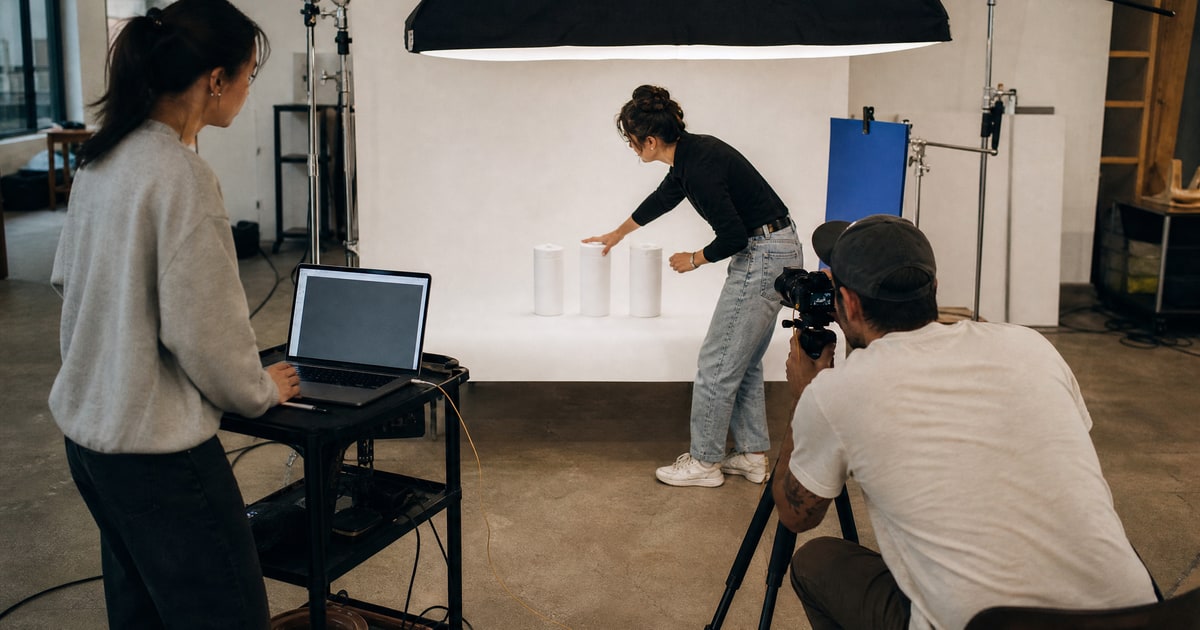
- Proven demand, first reorders: the full package, a filmed 30 to 60 second listing video from a researched claims list, plus a short ad cut from the same shoot. This is where most of the scorecard's weight starts paying.
- Scaling, multiple marketplaces: localized caption variants, seasonal re-cuts, and creator footage for ad placements, all drawing on raws you own because you scored row three properly at stage two.
Skipping stages burns cash in both directions: a brand film at validation stage spends proof-of-concept money on polish, and a montage still running at scale leaves conversion on the table in every session your ads pay for.
What video vendors will not tell you
Startup-targeted vendors will not tell you that their "Amazon packages" are often social-media templates with a resolution change. Amazon's listing slot has its own rules, no pricing, no promotional language, no unverifiable claims, and its own audience condition, muted comparison shoppers. Ask a candidate what they would refuse to put in a listing video; a vendor with no refusal list has not read the policies they are selling against.
They will also not say when video is premature. A listing with no reviews, an unproven price point, and zero sales history has bigger levers than video, and an honest vendor would sequence you: images and rating base first, video when sessions exist to convert. Vendors sell what they make. The scorecard partially corrects for this, but the final defense is your own stage-matching.
Related answers
- Amazon product video services and pricing
- Turn photos into Amazon product video
- Recommended package for Amazon launch video + lifestyle clip
- Best Amazon product sourcing services for startups
- Amazon sourcing and product research services: the complete guide
If you want stage-matched creative wired into the sourcing pipeline that ships your product, that is the startup setup at Flapen.