
Key Takeaways
- The right question is not "is this a good product?" It is "is this a growing market where I can profitably capture market share?" Market size minimum $2M per year, positive growth trajectory, and viable traffic channels.
- Phase 1 validation costs $5,000 to $10,000 for 200 to 300 units. Scale only after rating, conversion rate, and cost of customer acquisition are proven. Never go all in on an unvalidated product.
- There are 5 traffic channels, not 2. Most sellers only use organic and Sponsored Products. The 3 channels they ignore currently have the highest ROAS.
- Plan your kill criteria before you launch. Knowing when to stop is as important as knowing how to start.
Most Amazon sellers fail not because they chose the wrong product. They fail because they asked the wrong question from the beginning.
They open Helium 10 or Jungle Scout, filter by review count, search volume, and competition score, and pick whatever passes the snapshot test. Then they commit $15,000 to $30,000 on full inventory. When it fails, they have no framework for what went wrong or what to do next.
The right question is not "is this a good product?" The right question is: "Is this a growing market where I can profitably capture market share through organic, advertisement, promotion, influencer, or off-channel traffic?"
That single question is the entire methodology I have built over 10 years, 300+ brand launches, and auditing 60+ acquired brands worth $5M to $10M each as VP of Engineering at 2 Amazon aggregators. Today we are a 55-person in-house team with sourcing and quality control in Guangzhou, creative studios in Dubai, and growth tracked through live dashboards with 120+ KPIs. This is not theory. This is daily operations.
This post covers the complete launch process. Not a checklist. The thinking behind each step. And I need to be direct about what this requires: this is not dropshipping. This is not a passive income play. You need $5,000 to $10,000 for a first validation run, 3 to 6 months before you see meaningful data, and consistent operational work.
Here is what actually works.

Why most Amazon launches fail before they start
The industry teaches product research as a filtering exercise. Low competition, high demand, under 500 reviews. These are snapshot metrics from tools that cannot measure where a market is going.
Helium 10 and Jungle Scout show you maybe 10 data points. They show today's review count. Today's search volume. Today's BSR. They cannot tell you whether this market is growing or shrinking. They cannot tell you the return rate. They cannot tell you whether you can profitably acquire customers in this category.
The tools define the strategy when it should be the other way around.
The real failure pattern looks like this: a seller commits full capital to an unvalidated product in a market they do not understand. Sales are flat. They increase ad spend hoping the numbers turn around. The numbers do not turn around. Three months later they have lost $20,000 and still do not know why.
I know this pattern because I lived it. Early on, I kept pouring money into failing launches hoping the rankings and ads would improve. They did not. That was the most expensive lesson I have ever learned. And it is the reason the entire framework I am about to walk you through exists.
The solution is simple in concept but requires discipline in execution. Validate with small capital. Commit only to what works. Have explicit criteria for when to stop.
Here is how operators actually think about launching a product.
Validate the market before you validate the product
Before you evaluate a single product, before you contact a single supplier, you need to answer one question with data: is this a growing market where I can profitably capture market share?
Here are the criteria that actually matter. Not review count. Not BSR. Not "competition score."
Market size. Minimum $2M per year total addressable market. Below that, even dominant market share will not generate enough revenue to justify the effort. This is a hard floor. I learned it after entering markets that looked "low competition" but were actually just too small.
Growth trajectory. Is this market growing year over year? Not a snapshot of today. A trend over time. A large market that is declining is worse than a small market that is growing. If you cannot answer the growth question with data, you are not ready to research the product yet.
Return rate. High return rate in a category is a structural problem no listing optimization can fix. Analyze this before entering, not after.
Conversion rate potential. Is the conversion rate achievable given the competitive landscape and your listing quality?
Traffic channel viability. Can you profitably acquire customers through at least 1 of the 5 traffic channels in this specific market?
I analyze 90+ data points across these dimensions using Flapen's product research platform. The reason everyone teaches product research wrong is because the tools define the strategy. Not the other way around.
So the real question becomes: once you confirm the market is right, how do you decide what to build?
Most educators say "differentiate through bundling, creative packaging, or unique features." That is guesswork. Here is what I do instead. I analyze negative reviews across the top competitors. I measure the rating gap: the difference between what existing products deliver and what customers explicitly say is missing. When the top 5 products all sit at 3.8 stars and share the same complaint about durability, that is not a complaint. That is a product brief.
Only innovate where the market is explicitly asking for it. The market tells you where to innovate. You do not guess. This is feedback-driven innovation, and it outperforms creative speculation every time across the 300+ brands we have launched at Flapen.
How much money you actually need to launch
The industry says you need $50,000 or more to launch on Amazon. That number assumes you go all in with full inventory on one product. That is exactly the advice that destroyed my early launches.
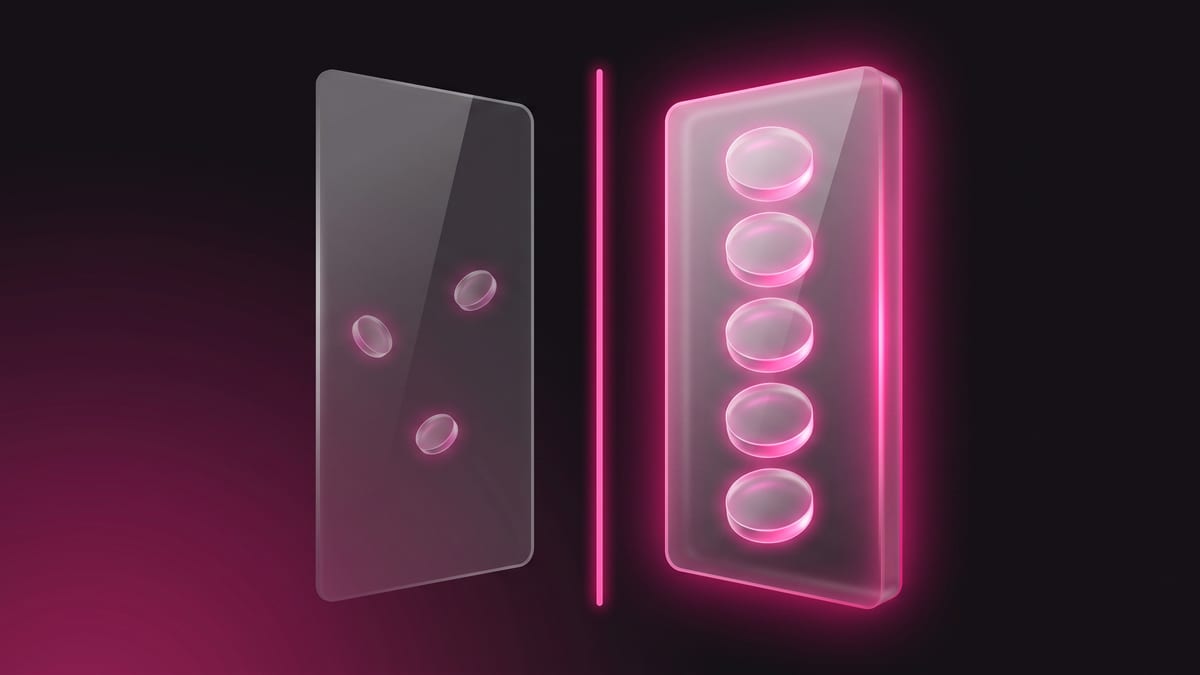
Here is what actually works: a two-phase approach where Phase 1 is validation and Phase 2 is scale.
Phase 1: Validation ($5,000 to $10,000)
Phase 1 is not about generating profit. It is about establishing product-market fit with minimal capital at risk. Your budget covers:
- Inventory: 200 to 300 units. Enough to generate meaningful data on conversion rate, return rate, and cost of customer acquisition while limiting downside.
- Samples and testing: $200 to $500 to evaluate 3 to 5 supplier samples before committing to a production run.
- Business setup: LLC formation (~$500), trademark filing ($350 per class at the USPTO), GS1 barcode ($30).
- Listing creation: Photography, copywriting, A+ content.
- Initial advertising: Enough to activate your first traffic channels and start measuring cost of customer acquisition.
Test up to 4 products simultaneously at this level. Each product costs $2,000 to $4,000 in Phase 1. This portfolio approach lets data pick the winner instead of your gut. This is exactly how we reduced launch risk across 300+ brands at Flapen.
If you want your own Phase 1 number instead of mine, run it through our free launch cost calculator. It works out the peak capital you actually need, the month you break even, and the ROI on the way there.
The decision gate
Before you commit a single dollar more, these metrics must pass:
- Rating is stable or improving
- Conversion rate is at or above category average
- At least 1 traffic channel is profitable
- Return rate is below category threshold
If the product does not pass the gate, you kill it. No emotion. I will cover kill criteria in detail later in this post. But understand this now: planning for the possibility of killing a product is not pessimism. It is discipline.
Phase 2: Scale
Phase 2 capital is committed only to products that passed the decision gate. Full inventory investment, expanded traffic channel activation, and optimization based on real performance data. Not assumptions.
The difference between Phase 1 and Phase 2 is the difference between a hypothesis and a validated bet. You do not scale a hypothesis. You validate it first, then commit real capital.
How to source your product without guessing on quality
Sourcing is not just finding a supplier on Alibaba and placing an order. It is quality control, landed cost calculation, and negotiation with data.
Here is what to evaluate when vetting suppliers:
Sample quality. Order from 3 to 5 suppliers. Compare build quality, materials, packaging, and consistency. Never commit to a production run based on a single sample.
Total landed cost. This is not just unit cost. It includes custom packaging, DDP shipping, FBA prep, and duties. Your landed cost must fit within your target profit margin. If it does not, the product does not work regardless of how good the market is. Our landed cost guide walks through every line between the factory floor and a sellable unit.
Lead time and MOQ. For Phase 1, you are ordering 200 to 300 units, not a full production run. Negotiate accordingly. Some suppliers will not accommodate small orders. That is fine. Find the ones who will.
FBA experience. Has the supplier shipped to Amazon FBA warehouses before? Do they understand FNSKU labeling, carton requirements, and country of origin marking? This saves weeks of back-and-forth.
Communication clarity. If the supplier cannot clearly answer your questions during the sample phase, they will not magically improve during production.
We built a sourcing and quality control studio in Guangzhou because outsourcing QC at scale is how you get inconsistent products and high return rates. Return rate kills profitability regardless of how good your traffic strategy is. When you physically handle the products, run the inspections, and negotiate face to face, the quality gap shrinks dramatically.
For a Phase 1 order of 200 to 300 units, you will not have this infrastructure. But you can still apply the same principles: multiple samples, clear quality standards documented in writing, and a pre-shipment inspection from a third-party service before the goods leave the factory.
Set up your business and protect your brand
This section is operational, not strategic. But skipping it creates problems later.
LLC or Corporation. Required for your Amazon seller account and payment processing. File in your home state or a business-friendly state like Wyoming or Delaware. Timeline: 3 to 7 days. Cost: state filing fees run $35 to $500 depending on the state; budget roughly $500 all-in with a registered agent.
Trademark. File with the USPTO. Since the January 2025 fee restructure there is a single base application fee of $350 per class, with surcharges if you write your own goods description instead of using a pre-approved one. This is required for Amazon Brand Registry, which unlocks A+ Content, Amazon Vine, Sponsored Brands ads, and brand protection tools. Use your trademark filing number to apply for Brand Registry immediately. You do not need to wait for full registration.
Brand Registry. This is not just a checkbox. It is a strategic enabler. Without it, you cannot access Amazon's most powerful listing and advertising tools. Register as soon as your trademark application is filed. The trademark and Brand Registry guide covers the filing order, because this is the longest-lead item in the whole setup.
New seller perks. Amazon currently offers incentives for new brands: 10% back on your first $50,000 in branded sales (then 5% through your first year, up to $1M, capped at $52,500 in total bonus), a $100 Partnered Carrier shipping credit, matched Sponsored Products ad credits up to $1,000, a $200 Vine credit, and free storage and customer returns through automatic FBA New Selection enrollment. Most of the branded perks require enrolling in Brand Registry within six months of your first listing, and the bonus window closes at the end of your first year. Take advantage of these. They reduce your Phase 1 costs.
Build a listing that actually converts
Your listing is not a photography project. It is a conversion rate problem.
If your primary image does not get clicks in search results, nothing else matters. This is the single highest-leverage element in your entire listing. It determines whether anyone even sees your product page. Primary image optimization is a CTR problem, not a "make it pretty" problem.
Here is what a listing built for conversion looks like:
Title. Keyword-rich and clear. Your most important search terms go here. Do not stuff it. Make it readable by a human while including the terms that drive organic ranking.
Bullet points. Lead with benefits, not features. What problem does this product solve? What will the customer experience? Then support with the specific feature that delivers that benefit.
Images. White background main image (Amazon requirement), lifestyle images showing the product in use, infographic images highlighting key features and dimensions. Every image should answer a question or overcome an objection.
A+ Content. Visual brand story and product breakdowns. This is part of conversion rate optimization, not a standalone feature. It extends the selling job your images and bullets started.
Backend keywords. Fill every available field. Include alternate spellings, Spanish translations if relevant, and related terms your customers might search.
These are the first three steps in the Brand Audit Framework I use when diagnosing a struggling product: listing quality, primary image CTR, and conversion rate. Build them right from day one so you do not have to fix them under pressure later.
For FBA preparation: FNSKU barcode on every unit, country of origin label, proper carton labeling, and a shipping plan created in Seller Central before your inventory leaves the factory.
The 5 traffic channels you need to plan before launch
Most sellers launch and immediately run Sponsored Products text ads. That is 1 out of 5 traffic channels and 1 out of 3 advertisement formats.
The entire Amazon education market is focused on organic ranking and Sponsored Products. That leaves 3 channels completely untapped. That is exactly where the highest ROAS currently exists because nobody is competing there.
Here are all 5:
1. Organic. Requires high inventory commitment, rapid sales velocity, and first-page ranking. The traditional play. Increasingly expensive and competitive. You build this over time through the other 4 channels, not as a standalone strategy.
2. Advertisement. Not just text ads. Image ads and video ads are still massively underutilized relative to text. I set different ACOS targets at every product stage because what makes sense at launch does not make sense at scale. A new product needs aggressive ACOS to build velocity. A mature product needs efficient ACOS to protect margin.
3. Promotion. Discounts, deals, and coupons to drive velocity. The industry treats this as "just deals." I treat it as a strategic traffic channel with its own economics and timing.
4. Influencer. Amazon's creator program operates on a revenue share model. Lower upfront cost, slower start, but sustainable and compounding over time.
5. Off-channel. External traffic from blogs, social media, and other platforms. Becoming more critical as on-platform ad costs rise.
You do not need to activate all 5 at once. You need to understand the economics of each so you activate the right ones for your specific product and market.
For Phase 1 launches, start with advertisement and promotion. Evaluate influencer and off-channel as lower-cost alternatives if your ad budget is constrained. The order you fire them in during the launch window matters as much as the mix, and our product launch guide lays out that sequence.
The metric that ties it all together: cost of customer acquisition per channel. If you cannot measure this independently for each active channel, you cannot know whether your launch is working. This is the most important metric Amazon sellers are ignoring, and it is how we allocate traffic budgets across every brand we manage at Flapen.
If you want to use the same product research methodology I just walked through, that is exactly what Flapen was built for. 90+ data points, growing market identification, traffic channel analysis.
The decision most sellers never plan for
Launching is a hypothesis. Phase 1 data tells you whether the hypothesis is correct.
Most sellers have no framework for the hardest decision in ecommerce: should I keep spending on this product or cut it? They launched, the ads are running, sales are not where they should be, and they just keep spending hoping things improve.
I did the same thing. We kept pouring money into that product for three months hoping the ads would turn around. They did not. Here is what that taught me about kill criteria.
There are 4 signals to monitor continuously after launch:
Rating trend. Stable, improving, or declining? A declining rating with no addressable root cause is a kill signal.
Return rate. Within acceptable range for the category, or above threshold? If the product itself is the problem, no amount of marketing fixes it.
Conversion rate. Holding steady, or eroding? Persistently below category average despite listing optimization means product-market fit does not exist.
Cost of customer acquisition trajectory. Stable, or rising across all active channels? Rising CAC with diminishing returns means the market is rejecting you.
Based on these signals, you make one of three decisions:
Scale. All 4 signals positive and stable. Commit Phase 2 capital, expand traffic channels, increase inventory.
Fix. 1 to 2 signals declining but the root cause is identifiable and actionable. Listing quality, ad targeting, pricing. Intervene surgically before scaling. This is what happened with one of our agency clients, Aubrey. The data showed a conversion problem, not a traffic problem. We diagnosed the real bottleneck through a full brand audit, optimized the listing, and achieved a 40% conversion rate increase within the first month. Aubrey scaled to $30,000+ per month and then hired us again for a second brand.
Kill. Multiple signals declining with no actionable fix. Walk away. Stop spending. Do not rationalize continued investment. If you cannot identify a concrete, actionable fix for a declining signal, the answer is kill. Not "wait and see."
The framework makes the decision data-driven so you do not fall into the emotional trap of "just one more month." Plan your kill criteria before you launch. It is not pessimism. It is how operators protect capital.
The question was never "is this a good product?" The question is "is this a growing market where I can profitably capture market share through organic, advertisement, promotion, influencer, or off-channel traffic?"
Every step in this process answers a different dimension of that question. Market validation confirms the opportunity exists. The two-phase budget protects your capital. Sourcing ensures your product can compete. Traffic channel activation captures the demand. Kill criteria ensure you never bleed money on a hypothesis that failed.
Here is what to do this week. Before you spend a dollar on inventory, run the Market-First Question on your product idea. Market size (minimum $2M per year), growth trajectory, return rate, traffic channel viability. If you cannot answer the growth question with data, you are not ready to launch.
If you want to run the numbers on your specific product idea, we built a profit forecast dashboard inside Flapen that calculates your chance of success, your P&L, and your cash flow. You can try it free.
If you want to see exactly what a complete Amazon launch looks like from start to finish, I have mapped the full launch roadmap, every step from research to first shipment to scale.