Key Takeaways
- Your primary image is the single highest-leverage element on your listing. It determines whether anyone even clicks to see your product. Everything else is downstream of that click.
- Image strategy should be driven by negative review analysis and the Rating Gap, not by generic photography best practices. The market tells you what to communicate. You do not guess.
- Images directly affect your cost of customer acquisition across advertisement, organic, and off-channel traffic. This is a profitability lever, not a creative expense.
- At Phase 1 (300-unit validation), invest in a solid main image and a structured secondary set. Full creative optimization happens at Phase 2 when you have validated product-market fit.
- If your listing is not converting, images are the first place to audit. Most sellers adjust ads when the real problem is conversion rate. Most conversion rate problems start with images.
Most sellers treat images as a photography problem. That is the wrong starting point.
The conventional advice goes like this: hire a photographer, follow Amazon's image requirements, make the product look good. Upload. Move on.
That advice is not wrong. It is just incomplete. And incomplete is where most sellers lose money without realizing it.
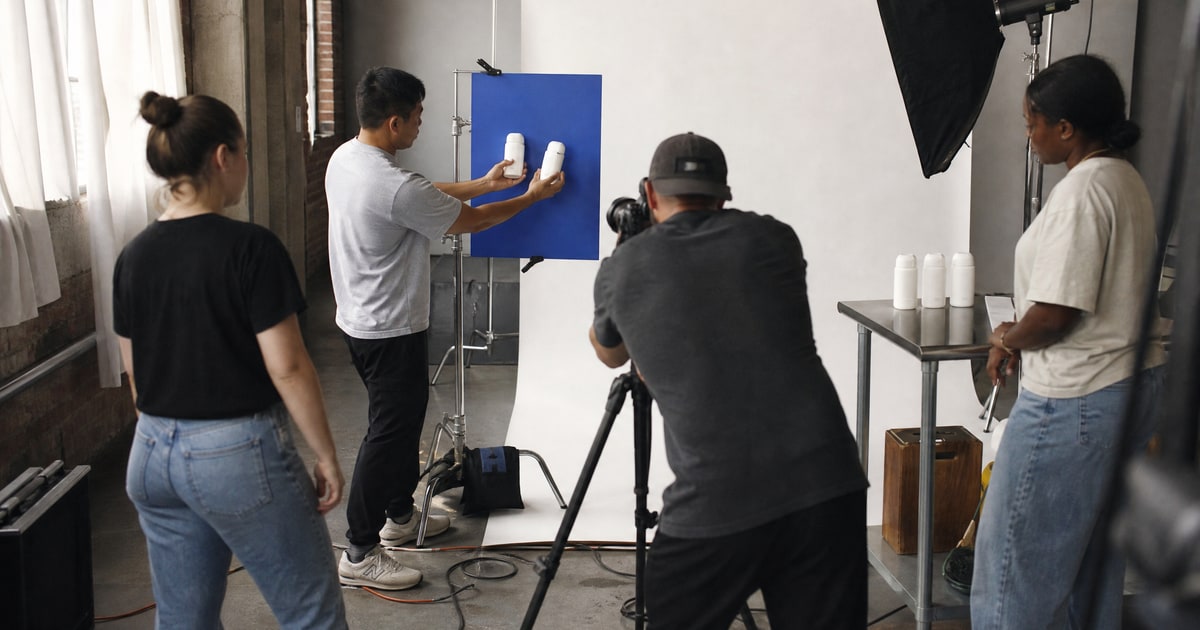
Here is how operators actually think about this. Your images are not a photography problem. They are a conversion rate optimization system. The craft still matters, and our product photography walkthrough covers the shooting side, but craft without a conversion brief is just expensive decoration. Every image slot has a specific job in a deliberate sequence. That sequence addresses objections, communicates market-requested benefits, and reduces return rate. The goal is not aesthetics. The goal is conversion.
The real question is not "do my images look professional?" It is "are my images communicating what the market data says matters?"
This distinction is the difference between a listing that looks good and a listing that converts. I have seen both across 300+ brand launches. They are rarely the same thing.
In the Brand Audit Framework we use at Flapen, primary image click-through rate is the first diagnostic lever. Step 1 of the audit. Not ads. Not keywords. Not pricing. Images. Because if your primary image is not generating clicks in search results, nobody sees your listing. Nobody reads your bullet points. Nobody adds to cart. Your ad budget evaporates into impressions that go nowhere.
When conversion rate is low, no amount of ad spend fixes it. You are paying to send traffic to a listing that does not convert. That is the most expensive mistake on Amazon, and it starts with images.
We see this pattern constantly across the 200+ brands we manage per year at Flapen. A seller comes to us with flat sales. They have been adjusting bids, adding keywords, increasing ad budget. The bottleneck is not traffic. The bottleneck is conversion. And conversion starts with images. The failure modes repeat often enough that we catalogued them separately in why your Amazon images are killing your conversion rate.
Start with the market data, not a template
Most image guides hand you a template. Slot 1: main image. Slot 2: lifestyle. Slot 3: infographic. Fill them in and you are done.
The problem is the same one that plagues product research in this industry. The template defines the strategy instead of the other way around. You end up with images that check boxes instead of images that sell.
Here is what actually works. Before you design a single image, run the Rating Gap Method on your target market.
Pull the negative reviews from the top 5 competitors. Not 5 random reviews. All of the negative reviews. Identify the complaint patterns. What are customers consistently frustrated about? What keeps coming up in 1-star, 2-star, and 3-star reviews? Mining reviews well is a discipline of its own, and our reviews and feedback guide covers how to pull the recurring complaints apart from the one-off noise.
The features you highlight in your images should come directly from this analysis. Not from brainstorming. Not from what your photographer thinks looks good. From what customers are explicitly telling you is missing or broken in the existing options.
This is feedback-driven innovation applied to creative assets.
If the top 5 competitors in your market all have complaints about durability, your close-up feature image should showcase materials and construction quality. If size misunderstanding is the top complaint, your size reference image becomes the most important secondary image in your set. If "looks cheap in person" appears repeatedly, your lifestyle and close-up images need to communicate premium quality at every angle.
The market wrote your creative brief. You do not need to guess.
This connects directly to the Core Question: "Is this a growing market where I can profitably capture market share?" Your images are part of how you capture it. They are not separate from your market strategy. They are an expression of it.
The 7-image conversion sequence
Amazon gives you 7 to 9 image slots depending on the category, plus a video slot. Most sellers treat these as independent photos. They are not. They are a conversion sequence. Each image builds on the one before it, moving the buyer from curiosity to confidence to purchase. Seven is the floor every category gets, so build the sequence below first and use any extra slots your category allows for tested alternates.
Here is the framework we use across 300+ brand launches at Flapen. If you want the same sequence logic applied end to end, including where A+ content picks up after the gallery, our product images and enhanced content guide walks through it step by step.

Slot 1: Primary image. This is the single highest-leverage element in your entire listing. Pure white background. Product filling 85%+ of the frame. No props, no text, no logos on the image itself. Amazon enforces these requirements, but compliance is not the goal. Performance is the goal. The current Amazon image requirements, down to pixel dimensions and the zoom threshold, are worth checking before you shoot.
Small changes in angle, lighting, or framing can shift click-through rate measurably. We test multiple main image versions for every launch at Flapen by isolating the variable through PPC campaigns. Your personal preference does not matter here. The data decides which image wins.
Slot 2: Lifestyle image. Show the product in use by your target customer. Not a stock photo of a model. An image that helps the buyer picture themselves using this product in their real life. How the main frame and the lifestyle frames split the work is worth getting right on its own terms, and we broke that down in main versus lifestyle Amazon images.
Here is an operator-level detail most sellers miss. Lifestyle images are reusable across off-channel and influencer traffic channels. When you design lifestyle content, think about multi-channel use. That same image can work on social media, in blog content, and in creator partnerships. Design once, deploy across multiple traffic channels. This is how you lower your cost of customer acquisition across the full system.
Slot 3: Infographic (benefits). This is where the Rating Gap Method pays off. The features you call out in this image should come directly from your negative review analysis of the top competitors. Use actual buyer language from those reviews to write the callouts. Not marketing copy. Customer language.
If buyers in your market keep complaining that competing products "break after 2 weeks," your infographic should call out the specific engineering that addresses that complaint. The language should mirror how customers talk about the problem, because that is what resonates.
Slot 4: Close-up features. This image answers one question: "Why is this better than the cheaper version?" Zoom in on materials, stitching, mechanism, texture. Whatever the tangible quality differentiator is.
This directly addresses the quality objections surfaced in negative reviews. If competitors get 3-star reviews saying "feels flimsy" or "cheap materials," your close-up must visually communicate the opposite. Show the detail that justifies your price point.
Slot 5: Size and fit. This is the number one driver of preventable returns. Size misunderstanding shows up in negative reviews across almost every physical product category. Include dimensions in both inches and centimeters. Use hands or common objects for scale. If your product comes in multiple sizes, show them side by side.
This matters beyond customer satisfaction. Return rate is a kill criteria input. Products with high return rates driven by size misunderstanding are bleeding money on a problem that one image can fix. Accurate size communication in your images directly protects your margins.
Slot 6: Use case or before/after. This overcomes the "will this work for me?" objection. Show the result or transformation. If the product solves a visible problem, show the problem and the solution. If it is a tool, show it in action in the specific context your target customer uses it.
Slot 7: Trust and social proof. Certifications, warranty information, customer quote overlay, or brand story elements. The function of this image is to reduce purchase hesitation at the final step. Trust signals measurably improve conversion rate. This is not about building a "brand story." It is about giving the buyer one more reason to click "Add to Cart" instead of going back to search results.
Video slot. Use it. A 30 to 60 second video showing the product in use outperforms static images for engagement. This is especially true on mobile, where the majority of Amazon traffic now comes from.
How images affect your cost of customer acquisition
Most sellers think of images as a creative expense. Something you do once and forget. The data shows it is a profitability lever that affects your cost of customer acquisition across multiple traffic channels.
Advertisement channel. Your primary image determines your click-through rate in search results and in Sponsored Products placements. Low CTR means fewer clicks per thousand impressions, which means you pay more per actual visitor. Higher CTR means lower effective cost per click, which means lower cost of customer acquisition through ads. A listing with poor images will waste any ad budget you throw at it.
Organic channel. Amazon rewards listings that convert. Conversion rate is a ranking input. Better images improve conversion rate, which improves organic ranking, which drives free traffic. Organic is the lowest-cost traffic channel. Everything that improves conversion rate makes organic traffic work harder for you.
Off-channel and influencer channels. When your product gets featured in creator content, social media, or blog posts, your listing images are often what the buyer sees first when they click through to Amazon. Strong images close the sale that the external traffic initiated. Weak images waste the traffic someone else drove to you.
Return rate. This one is silent but expensive. When your images accurately represent the product, returns drop. When images create expectations the product does not meet, returns spike. Every returned unit is a cost with no revenue. Returns kill profitability regardless of how many units you sell.
This is why images are not a line item on your creative budget. They are a direct input to your cost of customer acquisition, the most important metric Amazon sellers are ignoring.
Image investment at Phase 1 vs. Phase 2
If you are following the Two-Phase Launch framework, your image investment should match your phase.
Phase 1: 300-unit validation
You need a strong primary image and a complete 7-image set that covers the conversion sequence above. You do not need a $5,000 photoshoot. You need images that are good enough to generate reliable conversion rate data.
The purpose of Phase 1 is validation. You are testing whether this product has product-market fit. Your images need to be professional and structured but not over-optimized. If conversion rate is bad with solid images, the product has a problem. If your images are terrible, you cannot tell whether the issue is the product or the presentation. That distinction matters when you reach the decision gate.
Validate before you commit capital. That applies to creative investment the same way it applies to inventory.
Phase 2: Scale
Once your Phase 1 data validates the product (rating stable or improving, conversion rate at or above category average, at least 1 traffic channel profitable, return rate below threshold), invest in full creative optimization.
This means professional studio production. A/B testing multiple main image versions using Amazon's Manage Your Experiments tool or PPC split tests. Manage Your Experiments splits traffic 50/50 between two versions, runs for roughly 4 to 10 weeks, and only calls a winner at 95% significance, so budget a real testing window instead of eyeballing a week of sales. Lifestyle content designed for reuse across off-channel and influencer channels. Video content. Seasonal variations if relevant.
At Phase 2, you have proven product-market fit. Now you are optimizing the machine. Image optimization at this stage compounds because you are applying it to a product that already works.
The image audit: how to diagnose whether images are your bottleneck
If your sales are flat or declining, images are the first place to look. This maps to steps 1 through 3 of the Brand Audit Framework we use across every client at Flapen.
Check primary image CTR. If your impressions are healthy but clicks are low relative to your category, your main image is not doing its job in search results. Buyers see your product and scroll past it. No click, no chance of conversion. Compare your CTR against competitors in the same market using your PPC data.
Check conversion rate. If traffic is arriving but not buying, your secondary images and listing content are failing to convert. Pull your unit session percentage from Business Reports. Benchmark it against your category average. If you are below average, your image set and listing content are the primary suspects.
Check return rate. If returns are high and reviews mention "looks different than pictured" or "smaller than expected" or "not what I thought," your images are setting wrong expectations. This is fixable, but it requires honest assessment. Your images must represent the actual product, not an idealized version of it.
The bottleneck is rarely where you assume it is. Most sellers adjust bids and keywords when the real problem is conversion rate. Most conversion rate problems trace back to images.
Do not guess which image is the problem. Use Amazon's Manage Your Experiments if you have Brand Registry, or run controlled PPC tests isolating one variable at a time. Test one change, measure the result, apply the winner. This is conversion rate optimization, not decoration.
Now let me show you what this looks like with real data. We test images across 200+ brands per year at Flapen. The pattern is consistent. When a listing underperforms, the image audit identifies the bottleneck faster than any other diagnostic. Fix the images first. Then evaluate whether you have a traffic problem or a product problem. If you would rather have that audit run for you, Flapen's listing optimization scrapes any live listing, scores the gallery and the copy against the market, and tells you what to fix first.
Your images are not a photography problem. They are a conversion rate optimization system driven by market data.
Here is one thing you can do this week. Pull the negative reviews from the top 5 competitors in your market. Identify the top 3 complaints. Then check whether your current images address those complaints. If they do not, that is your first optimization. Free, actionable, and directly tied to what the market is asking for.
If you want to run the numbers on your specific product idea, we built a profit forecast dashboard inside Flapen that calculates your chance of success, your P&L, and your cash flow. You can try it free.
And if you are still figuring out the full launch process from start to finish, I put together a free launch roadmap that covers every step. From market validation to image strategy to traffic activation.